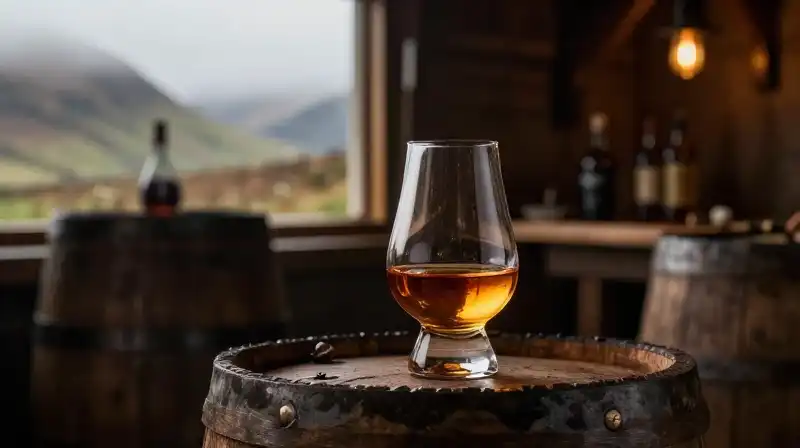

Scotch vs. Whiskey: Understanding the Key Differences

Introduction
The terms “Scotch,” “Whiskey,” “Whisky,” “Bourbon,” and “Irish Whiskey” are often used interchangeably, leading to significant confusion about their origins, ingredients, and flavor profiles. While many drinkers treat these names as synonymous, they represent distinct and strictly regulated categories of distilled spirits. The core confusion usually stems from the difference between “whisky” (the generic category of distilled, aged grain mash) and “Scotch” (a specific type of whisky defined by its place of origin). Understanding these distinctions is crucial for appreciating the nuances of different spirits and ensuring you are buying what you intend to drink.
Whiskey vs. Whisky: A Linguistic Distinction
Before diving into spirit types, it is important to clarify the difference between “Whiskey” and “Whisky.” These spellings are primarily geographical and historical, not reflective of different spirits. The difference traces back to language: “Whisky” is the term preferred in Scotland and is rooted in the Scottish Gaelic phrase ‘Uisge beatha,’ meaning ‘Water of Life.’ Conversely, “Whiskey” became the standard spelling in the American and Irish markets, largely due to the influence of Irish immigrants during the 18th century. Regardless of the spelling, the spirit is the same broad category: a distilled and barrel-aged alcoholic beverage made from fermented grains.
Defining the Broad Category: What is Whiskey?
Whiskey (or Whisky) is the broadest classification. It refers to any spirit produced by distilling and aging fermented grain mash, typically in wooden casks. Because this definition is wide, it encompasses countless regional specialties—from Japanese Whisky to Canadian Whisky. The general process involves: using fermented grain, distilling it through a copper pot, and aging the resulting spirit, usually in oak barrels. Within this massive category, specific national regulations and ingredient requirements define the different spirits.
Scotch Whisky: The Definition of Origin
Scotch is not merely a taste; it is a legal designation. For a spirit to be called Scotch, it must meet strict criteria: it must be produced in Scotland, aged for a minimum of three years, and must use a grain mash that includes malted barley. Scotch whisky is further segmented into two types:
- Single Malt Scotch: Crafted at one distillery using exclusively malted barley. This allows for a strong connection between the spirit and the terroir or unique process of that specific mill.
- Blended Scotch: A mixture of various single malts and grain whiskies from different distilleries, designed to create a consistent flavor profile.
Scotch is often characterized by its drier profile and, in certain regional production styles, the use of peat, which imbues a signature smoky and earthy flavor.
Comparing Scotch to Other Major Spirits
To answer “Is whiskey and Scotch the same?”, the simplest way to think about it is that Scotch is a specific type of whiskey. While all Scotch is a whiskey, not all whiskey is Scotch. Here is a breakdown of key differences between major styles:
| Spirit | Primary Origin | Defining Ingredient/Base | Aging Characteristics | Key Flavor Profile |
|---|---|---|---|---|
| Scotch Whisky | Scotland | Malted Barley | 3+ years in traditional barrels | Earthy, smoky, often dry (peat-dependent) |
| Bourbon | United States | At least 51% Corn | Minimum 3 years in new charred American oak | Sweet, vanilla-forward, rich |
| Rye Whiskey | United States | At least 51% Rye grain | Varies (often year-round) | Spicy, dry, peppery |
| Irish Whiskey | Ireland | Malted and Unmalted Barley | Often uses third-generation casks | Smoother, mild, less smoky (rarely uses peat) |
| Japanese Whisky | Japan | Various grains (Rice, Barley) | Minimum 3 years in Japan | Clean, delicate, highly refined |
Addressing Common “People Also Ask” Questions
The confusion regarding specific brands and classifications is widespread. Here is how to navigate the most common questions:
- Is Scotch whisky the same as Scotch? Technically, ‘Scotch’ is the name of the style, while ‘Scotch whisky’ is the proper technical descriptor. Both refer to the same legally defined spirit made in Scotland.
- Is Jack Daniel’s a Scotch or whiskey? Jack Daniel’s is a Corn Whiskey (specifically, Tennessee Whiskey). It is American and would never be called Scotch, as it lacks Scottish origin.
- Is Bourbon a Scotch or whiskey? Bourbon is a distinct category of American whiskey. Scotch is a separate category of Scottish whisky. They are both types of whiskey, but they are defined by different laws and ingredients.
- Is Johnny Walker whiskey or Scotch? Johnny Walker is a Blended Scotch Whisky. It is a commercial blend of various Scotch spirits, intended to be consumed as a Scotch.
The Practical Difference: Taste and Experience
The difference in production methods leads to distinct sensory experiences:
Scotch: Because of its traditional three-year minimum aging and the use of regionally specific grains and casks, Scotch flavors are often complex and characteristic of the region. The potential use of peat imparts smokiness, giving it a bold, sometimes pungent character.
Bourbon: Defined by high corn content (often making it sweeter) and new, charred American oak, Bourbon tends to be very smooth, with dominant notes of vanilla, caramel, and sweetness.
Irish Whiskey: Since it generally does not use peat and often features a lighter, triple-distilled process, Irish Whiskey is typically noted for being exceedingly smooth and gentle on the palate.
Rye Whiskey: The defining characteristic of Rye is its spiciness. Because rye grain contains more oils than corn or barley, it brings a spicy, dry heat that is noticeably sharper than the sweeter Bourbon or the earthy Scotch.
Decision Criteria for the Connoisseur
If you are looking for guidance on which spirit fits your preferences, here are some practical criteria:
- Seeking Smoke and Depth? Look toward Single Malt Scotch from peaty regions like Islay.
- Seeking Sweetness and Smooth Finish? Bourbon, especially those aged in prime American oak, will likely be the best choice.
- Seeking a Mild, Approachable Experience? Irish Whiskey is designed to be “easy drinking” and less imposing than most Scottish or American spirits.
- Seeking Spice and Dryness? Rye Whiskey provides a unique “bite” that contrasts with the sweeter profile of corn-based spirits.
Final Takeaway: Understanding the Hierarchy
When purchasing spirits, remember that the category (Whiskey) is the container, and the origin or definition (Scotch, Bourbon, Irish, Rye) is what specifies the contents. There is no single “best” whiskey; the preference depends entirely on whether you desire sweetness, smoky intensity, or mild smoothness. By understanding the difference between a generic grain mash spirit and a strictly regulated product, you can confidently explore the wide and wonderful world of aged spirits without confusion.
Frequently Asked Questions
Is Scotch whisky the same as Scotch?
Technically, Scotch is the name of the style, while Scotch whisky is the proper technical descriptor, but both refer to the same legally defined spirit made in Scotland.
Is Jack Daniel's a Scotch or whiskey?
Jack Daniels is a Corn Whiskey, specifically Tennessee Whiskey, and is American. It would never be called Scotch because it lacks a Scottish origin.
Is bourbon a Scotch or whiskey?
Bourbon is a distinct category of American whiskey, while Scotch is a separate category of Scottish whisky. Both Bourbon and Scotch are considered types of whiskey, but they are defined by different laws and ingredients.
Is Johnny Walker whiskey or Scotch?
Johnny Walker is a Blended Scotch Whisky, which is a commercial blend of various Scotch spirits intended to be consumed as a Scotch.
How to Choose the Perfect Whiskey for Your Taste
Determine your desired sensory experience
Identify whether you are looking for smoke and depth, sweetness and smooth finish, a mild experience, or spice and dryness.
Seek Smoke and Depth
If looking for a bold, pungent, or smoky flavor, look toward Single Malt Scotch from peaty regions like Islay.
Target Sweetness and Smoothness
For a sweet, vanilla-forward, and smooth finish, choose Bourbon aged in prime American oak.
Prioritize Mild Experience
If you want an easy-drinking and gentle palate experience, select Irish Whiskey.
Select Spice and Dryness
To get a unique, sharp 'bite' that contrasts with sweeter profiles, choose Rye Whiskey.
Related Articles