
Scotch vs. Whiskey: Defining the Differences in Origin and Flavor

Introduction
The relationship between Scotch and whiskey is a common point of confusion for enthusiasts, but the answer is simpler than many believe: they are not synonyms. Scotch is a specific regional style of spirit, much like Chardonnay is a specific style of wine, while “whisky” or “whiskey” is the overarching category for all spirits made from fermented grains. To understand the differences, it’s crucial to look beyond flavor and examine the legal requirements, geographic origins, and core ingredients that define each.
Simply put, if a spirit is made in Scotland using specific methods, it is a Scotch. If a spirit is made globally but doesn’t meet the strict criteria of Scotland, it falls under the broader umbrella of whiskey or whisky. The distinctions are defined by geography and regulation, not just taste.
The Categorical Difference: Whisky vs. Whiskey
To avoid confusion, the difference between “whisky” and “whiskey” is primarily a matter of regional spelling convention. “Whisky” is the preferred spelling in Scotland, Canada, and Japan, while “whiskey” is standard in Ireland and the United States. However, using the spelling difference to define the spirits is incorrect. The term “Whisky” (or whiskey) is the general descriptor for spirits distilled from grain mash. This category is massive and encompasses countless styles from different continents.
Scotch is just one member of this family. When you ask, “Is Scotch the same as whiskey?”, the correct technical answer is that Scotch is a type of whiskey, specifically a British one. However, Scotch is not all whiskey; whiskey includes countless styles like American Bourbon, Canadian Rye, and Japanese whisky, none of which are Scotches.
Defining Scotch: Geographic and Legal Constraints
Scotch is defined by its strict geographic requirements and production methods, which ensure a consistency of quality and profile.
The key pillars of Scotch include:
- Origin: It must be distilled and aged entirely within Scotland.
- Grain: The primary grain used is typically malted barley.
- Aging: It must be aged in oak casks for a minimum of three years.
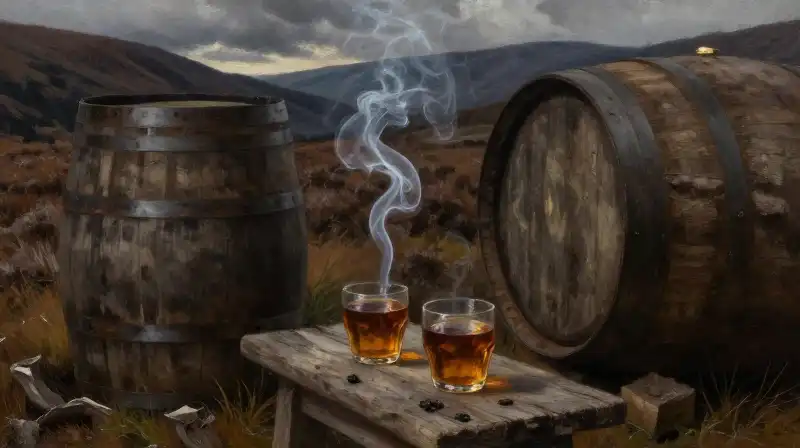
- Flavor Profile: Scotch is famous for its regional character, which can range from earthy and smoky (due to the use of peat) to soft and vanilla-driven, depending on the specific region and cask.
Within the Scotch category, there are two primary types: Single Malt and Blended. A Single Malt is produced entirely at one distillery using only malted barley. A Blended Scotch combines Single Malt whisky with a less expensive grain whisky, which is distilled at a different time and from a different source, and may come from multiple distilleries.
Defining Other Whiskies: The American and Irish Contrast
To truly understand Scotch, one must compare it to its global counterparts, particularly American Bourbon and Irish Whiskey. These styles are defined by entirely different legal mandates.
American Bourbon: This is a distinctly regulated American spirit. Its legal profile mandates at least 51% corn mash, minimum aging of three years in new, charred American oak barrels, and must be distilled and aged in the United States. Because of the high corn content and the charring of the virgin wood, Bourbon often possesses a sweet, vanilla-forward, and sometimes spicy flavor, unlike the typically drier or smoky character of Scotch.
Irish Whiskey: Originating in Ireland, this spirit is renowned for its smoothness. Irish whiskey often utilizes a triple distillation process, which contributes to its refined, less tannic character. It generally does not incorporate the peat used in traditional Scottish malting and tends to be very approachable compared to the rugged profiles of some Scotches.
Comparative Overview of Core Styles
The table below highlights the fundamental differences in the production constraints of the most prominent whiskeys.
| Style | Geographic Origin | Primary Grain Requirement | Defining Process/Aging | Typical Flavor Profile |
|---|---|---|---|---|
| Scotch | Scotland | Malted Barley (Usually) | Minimum 3 years in oak; often uses peat | Earthy, Smoky, Complex, Diverse |
| Bourbon | United States | Minimum 51% Corn | Minimum 3 years in new, charred American oak | Sweet, Vanilla, Caramel, Full-bodied |
| Irish Whiskey | Ireland | Mixed Grains (Corn/Barley/Rye) | Triple Distillation; generally smoother | Smooth, Light, Less Tannic, Balanced |
Addressing Specific Queries: Is Johnnie Walker Whiskey or Scotch?
The confusion around global brands like Johnnie Walker often arises from the mixture of terms and the fact that the company operates globally. Johnnie Walker is a globally traded brand, but its core products are Scotch whiskies. This is because the majority of their production—including their famous Blends—must meet the stringent requirements of being distilled and aged in Scotland.
Therefore, when you see a Johnnie Walker product, you are purchasing Scotch whisky, regardless of the marketing name. The brand name does not override the legal designation of its origin.
Decision Criteria for Scotch vs. American Whiskey
When deciding which style to appreciate, the choice should align with the flavor profile you seek, as the differences in grain and aging are substantial. Rather than seeking a ‘better’ spirit, choose based on the desired experience:
- Seeking Warmth and Sweetness? Choose Bourbon. Its corn base and new charred oak impart a characteristic, honey-like sweetness that is distinctly American.
- Seeking Depth and Complexity? Choose Scotch. The ability to select Single Malt from a specific region allows you to appreciate nuanced flavors, such as the smoky intensity of island whiskies or the delicate peaty notes of highland whiskies.
- Seeking Smooth Drinkability? Choose Irish Whiskey. Its triple distillation and lack of heavy peat or high alcohol aggressiveness make it an easy, elegant choice.
Practical Precautions and Final Synthesis
When evaluating spirits, it is vital to verify the origin and grain content, as high-quality spirits are legally mandated to adhere to strict rules. If a label makes claims of “Scotch” or “Bourbon” without noting the mandatory geographic origin, treat the claim with skepticism.
The takeaway is that the terms are not interchangeable. Scotch is a regional identity defined by law (Scottish location + Barley + Aging); Bourbon is a regulated American identity (US location + Corn + New Charred Oak); and Whiskey is the broad category. Recognizing these legal and production boundaries is the key to truly appreciating the vast differences between these classic spirits.
Frequently Asked Questions
Is Johnny Walker whiskey or Scotch?
Johnnie Walkers core products are Scotch whiskies, as the majority of their production must meet the stringent legal requirements of being distilled and aged in Scotland. Therefore, a Johnnie Walker product is considered Scotch whisky regardless of its marketing name.
Related Articles