

Boat vs. Yacht: Key Differences in Size, Luxury, and Usage

Introduction
In the world of watercraft, the terms “boat,” “yacht,” and “ship” are often used interchangeably, creating considerable confusion. However, these classifications are not governed by a single, universal definition. Instead, the distinction relies on a combination of factors: intended function, size, level of luxury, and operational capability. Generally, a “boat” is the most encompassing and simplest term, referring to any water vessel—from a small dinghy to a large motor vessel. A “yacht,” however, typically signifies a specific type of craft characterized by prestige, recreational use, and high levels of sophisticated engineering and luxury. Understanding the subtle yet significant differences between these terms is essential for anyone looking to buy, build, or simply charter a vessel.
Defining the Terms: Boat vs. Yacht vs. Ship
While the differences between a boat and a yacht are primarily rooted in lifestyle and design, it is helpful to situate these classifications against the “ship.” A “ship” generally represents the largest category, denoting a substantial vessel designed for long-distance travel and often intended for commercial or highly specialized autonomous operations. Unlike smaller boats, ships are built to handle extreme conditions and carry significant cargo or passenger loads. A boat is often a utility or localized vessel, while a ship operates on a much larger, independent scale.
When comparing the three:
- Boat: The broad, general term for any watercraft; often used for utility, short trips, or specialized tasks.
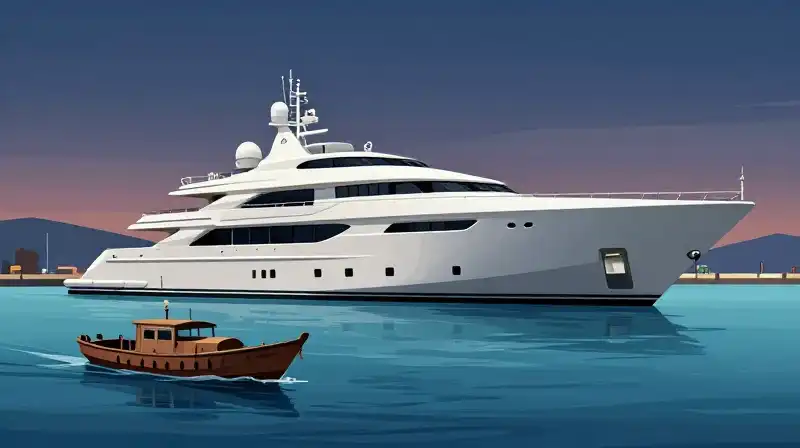
- Yacht: A mid-to-large vessel focused almost exclusively on luxury, private recreation, and sophisticated cruising.
- Ship: A very large, stable vessel designed for long-range voyages, typically possessing commercial or major infrastructure capabilities.
Key Distinctions: Size and Design Philosophy
Size is a common, though often arbitrary, metric used to distinguish a yacht from a regular boat. While there is no official standard, many maritime enthusiasts and sellers define a yacht as a vessel exceeding a minimum length—often cited as 35 to 40 feet. However, size alone does not make a craft a yacht.
The design philosophy is where the true difference emerges. Most functional boats focus on simplicity and utility, designed for specific activities like fishing or watersports. In contrast, yachts are engineered with a strong aesthetic focus on enhancing the passenger experience. This involves intricate, high-end layouts that prioritize comfortable living spaces over mere function. Features like a spacious salon, multiple well-appointed cabins, and high-end finishes are defining characteristics that elevate a vessel into the yacht category.
The Crucial Factor: Purpose and Usage
Perhaps the most definitive differentiator is the intended purpose of the vessel. While some larger boats may carry features that could be considered “luxury,” their primary mission remains functional or commercial. A yacht is fundamentally a leisure vessel, designed for personal recreation, entertaining, and extended pleasure voyages.
Crucial details of this usage include:
- Yacht Purpose: Private, non-commercial pleasure; luxury cruising; entertainment.
- Boat Purpose: Functional recreation (e.g., watersports, specific fishing); utility; commercial transportation (e.g., tour boats).
- Ship Purpose: Long-haul transport, cargo, or autonomous service.
Financial Implications and Complexity
The higher level of luxury and the advanced systems packed into a yacht translate directly into significantly higher investment and operational costs. Boats typically fall into a more accessible price range and require less complex, generalized maintenance. Yachts, due to their scale and sophisticated features—such as full kitchens, advanced navigation suites, or swimming pools—command substantially higher purchase prices. Furthermore, their systems (engines, electronics, structure) require elaborate and specialized maintenance, necessitating highly trained crew and specialized service, which greatly affects long-term ownership affordability.
Performance and Handling Capabilities
Advanced yachts are often categorized based on their handling and capability, especially when venturing into rough or open ocean conditions. Classifications such as Class A, B, C, or D are used to describe how a vessel can manage varying sea states. A higher classification suggests greater stability and seaworthiness for long-distance travel. While some smaller boats are perfectly suited for calm inland waters or short coastal trips, luxury yachts are frequently designed with more powerful engines and robust hulls to ensure prolonged stability and safe operation in challenging open ocean environments.
Practical Criteria for Selection: Boat vs. Yacht vs. Ship
When making a decision about which type of vessel suits a need, consider the following trade-offs, which move beyond simple definitions to practical application:
| Criterion | Boat (Utility/Standard) | Yacht (Luxury/Recreational) | Ship (Commercial/Scale) |
|---|---|---|---|
| Primary Goal Specific activity or transport | Leisure, comfort, pleasure | Long-distance operation, cargo, service | |
| Typical Length Under 35 feet | 35 to 80+ feet | Well over 100 feet | |
| Cost & Maintenance Lower entry point, simpler | Very high entry and operational costs | Industrial scale, complex, high operational needs | |
| Environment Inland, coastal, sheltered waters | Coastal cruising, offshore recreational travel | Deep oceans, long-distance voyages |
Summary of Key Takeaways
Ultimately, the primary distinction between a boat and a yacht is not merely its dimensions, but the *philosophy* behind its creation and use. While size provides a helpful general marker, the presence of extreme luxury, advanced comfort features, and a strict recreational mandate is what defines a yacht. If a vessel is built primarily for personal luxury and high-end cruising, it falls into the yacht category. If it is built for a specific job, simple utility, or general transport, it is more likely classified as a boat. For practical acquisition, prioritize the intended use and operational requirements over a generic length measurement, as these factors dictate long-term investment viability and maintenance needs.
Related Articles