
How Many Points is a Darts Bullseye and How to Score It


Introduction
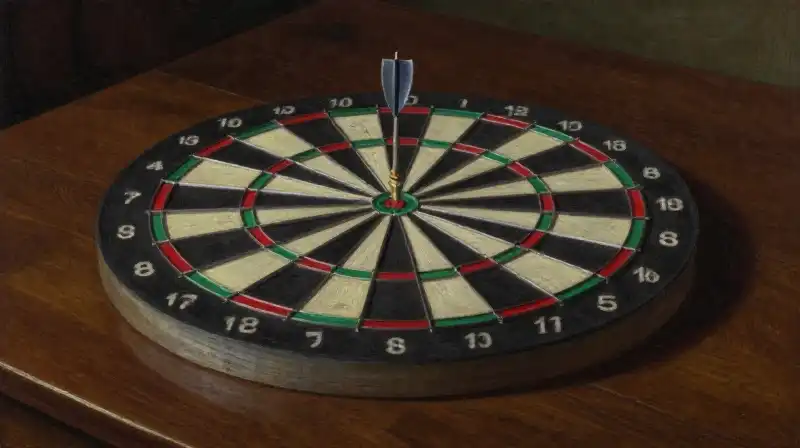
The bullseye in darts is not merely a cosmetic target; it is the highest single-segment score available on a standard dartboard, holding a value of 50 points. Unlike the popular Triple 20 segment, which yields 60 points and is often the primary strategic target during the early stages of games like 501, the bullseye serves a distinct and specialized purpose: providing the critical high-value doubles necessary for “checkouts”—the process of mathematically winning a match by reaching zero. While it is essential for beginners to know that a bullseye is worth double the value of the maximum single segment (25 points), its true utility lies in advanced tactics. In competitive darts, the bullseye’s role shifts from a general high-scorer to a powerful finishing tool. By understanding how this central target scores, players can master the mathematical precision required to convert difficult remaining scores into victory.
Anatomy and Scoring of the Bullseye
Understanding how the bullseye is structured helps players understand its score. On most modern dartboards (such as those used in professional 501 play), the bullseye is a designated double segment, which is why its value is always a multiple of two. The scoring mechanism functions as follows:
- Bullseye Value: A single dart hitting the bullseye registers 50 points.
- Classification: This target is classified as the Double 25 (D25).
- Target Purpose: Because it is a double segment, the bullseye’s strategic function is almost exclusively related to hitting specific required scores needed for a check out.
The outer ring of the bullseye, while worth points, is usually integrated into the overall design and is less crucial than the central double bull for high-level scoring. If a player misses the bullseye entirely, the resulting score is based on the segment they landed in (e.g., Triple 20, Single 1, etc.), not the bullseye’s inherent value.
The Strategic Difference: Bullseye vs. Triple 20
A common point of confusion among new players is why they should aim for a 50-point bullseye when the Triple 20 (T20) segment offers 60 points. While T20 is objectively the highest-scoring segment on the board and is preferred for rapidly reducing a high opening score (like 501), the bullseye is vital for game termination. The two targets serve different strategic roles:
| Target | Value | Primary Strategic Role | Scoring Difficulty |
|---|---|---|---|
| Triple 20 (T20) | 60 points | Rapid score reduction/maximizing points early in the game. | Medium (requires aiming for the ‘x3’ ring). |
| Bullseye (D25) | 50 points | Critical high-value double for checking out a specific remaining score. | Medium-High (requires hitting the bullseye center). |
| The strategy dictates that T20 is used when points need to be removed quickly, while the bullseye is employed when the “check-out number” requires a double (such as needing 10, 26, or 50). |
Mastering the Checkout and Bullseye Strategy
In a standard game like 501, a player must land their final dart on a designated double to win. This is where the bullseye shines. If a player is down to 50 points and needs to win, a bullseye hit guarantees victory. This requirement for specific doubles is the “math” of darts, prioritizing precision and placement over simply accumulating the highest score. Consider this scenario: if you have 51 points remaining, you must hit a single 25 (or a combination of singles/trebles) and then successfully complete the final checkout with a double, such as the bullseye (50) or Double 16 (32). The practical approach to scoring relies on three principles:
- Calculate the Last Dart: Always determine what double you need to finish the game.
- Target Appropriate Segments: Adjust your aim based on whether the required double is a small segment (Double 4, Double 10) or a high-value double like the bullseye.
- Prioritize Doubles: In the final 100 points of a game, the strategic priority shifts almost entirely from scoring high points to ensuring the final dart lands in a double, which includes the bullseye.
Addressing Common Dart Myths and Questions
Several questions frequently surface among players regarding darts mechanics and etiquette. It is useful to clear up the differences between common board elements and clarify the rules.
Understanding Point Variations and Regional Differences
While the central double bullseye is the standard 50-point target, some dart board variants or regional leagues may use different numbering or design layouts. However, within the widely adopted international professional standard, 50 points remains the definitive score for the bullseye.
Dartboard Usage and Etiquette
Regarding the specific query “Do darts players have to wear black trousers?”, there is no official rule dictating attire for professional darts, and many modern events include specific dress codes. However, while trousers are common, the focus on the sport is skill and accuracy, not appearance. Participants wear clothing that ensures comfort and allows for maximum range of motion, whether that includes dark or light colors.
Practical Considerations for Beginners
For beginners attempting to score a bullseye, the complexity is actually less about aiming at a single high-value spot and more about focusing on the consistent execution of the throw. The fundamental difference between darts and other target sports is that darts requires precise hitting of an athletic position (the ‘bullseye’ region) rather than just central accuracy in a simple circle. To begin, focus less on the value and more on hitting the center of the 25-point segment. Once consistency is achieved, the bullseye (50 points) becomes a highly effective tool for tactical play. By mastering the value of the bullseye and understanding its role as the ultimate checkout segment, a player transforms from a simple high-scorer into a tactically astute competitor.
Frequently Asked Questions
Do darts players have to wear black trousers?
There is no official rule dictating that darts players must wear black trousers. While some modern events may include specific dress codes, participants wear comfortable clothing that allows for maximum range of motion, whether the colors are dark or light.
How to master bullseye strategy in darts
Calculate the last dart needed
Always determine what double you need to finish the game.
Target appropriate segments
Adjust your aim based on whether the required double is a small segment (Double 4, Double 10) or a high-value double like the bullseye.
Prioritize doubles in the final stages
In the final 100 points of a game, shift strategic priority from scoring high points to ensuring the final dart lands in a double, which includes the bullseye.
Related Articles