

How Many Points for a Bullseye in Darts? A Guide to Scoring

Introduction
In the high-stakes world of competitive darts, the bullseye is far more than just a central target; it is a critical tactical tool. For players participating in standard dart variants, such as the popular game of 501, the bullseye is officially worth 50 points. This value is not arbitrary; it is specifically designated as a “double,” making it one of the most vital targets for concluding a round—a process known as “checking out.”
While high-scoring segments like Triple 20 offer the chance to rapidly reduce the required score, the bullseye serves a unique function. Understanding its 50-point value, and how it contrasts with other scoring zones, is essential for developing a winning strategy that balances aggressive scoring with precise finishing ability.
Detailed Bullseye Scoring Breakdown
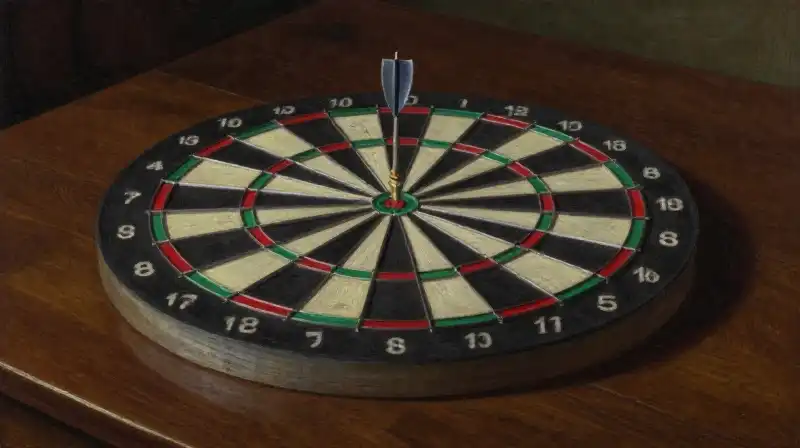
The bullseye segment is not a single monolithic target; it is divided into specific zones, each carrying a defined score. While the concept of aiming at “the bullseye” might suggest a single outcome, the modern dartboard provides two distinct scoring options within the central area.
The precise points awarded depend on which part of the bullseye the dart hits:
- The Bullseye (Inner): This central segment is designated as a Double. When struck, it awards a score of 50 points. This is the score required to complete a “leg” in a 501 game.
- Outer Bullseye (Ring): This ring surrounding the center is worth 25 points. It is a high-value segment but does not function as a double, meaning hitting it typically requires further turns to reach zero in a checkout scenario.
The Strategic Value of the 50-Point Double
In games like 501, the overall objective is not just to score the highest possible points, but to reduce the starting total to exactly zero by hitting a double. This is where the bullseye’s 50-point value becomes strategically irreplaceable.
Checking Out: A “check out” occurs when a player hits a double that brings their remaining score precisely to zero. If a player has 50 points left, hitting the bullseye (the double) wins the leg. This requirement places a huge premium on precision, as missing the double results in the score remaining unchanged, often forcing the player to try again on the next turn.
The perceived value of the bullseye—whether it is the 25 or 50 point segment—is often tied to this concluding role. While Triple 20 (60 points) is the highest scoring segment available, it is often too high to be the final throw, as it would result in a positive score (e.g., finishing with 10 points remaining) and thus not a win. The bullseye, particularly the 50-point double, is designed to be the ultimate tactical stopping point.
Bullseye vs. High-Value Segments: Risk and Reward
A common confusion among new players is whether the bullseye is less valuable than the highest-scoring segments on the board. In terms of raw points, it is not; 60 points (Triple 20) is higher than 50 points (Bullseye Double). However, their strategic utility is different, presenting a distinct risk-reward profile.
Triple 20 (60 points): This segment offers the fastest way to eliminate score, but it is inherently a difficult shot and is often too powerful to be the final required shot. It is a primary tool for mid-game point accumulation.
Bullseye Double (50 points): This target requires immense focus and accuracy for the final throw. The reward is the immediate end of the leg and victory. While 50 points is a high reward, the execution is highly specific—a successful bullseye finishes the game; an unsuccessful one merely wastes a turn.
The bullseye’s reliability as a finish makes its 50-point score incredibly valuable in the late stages of a match. It represents the difference between continuing to play and securing the win.
Clarifying Scoring Misconceptions and Rules
There are several common questions regarding the bullseye and darts scoring that require clarification to ensure a true understanding of the game.
- Does the bullseye score change by variant? While specific board designs can vary, the standard value of 50 points for the double bullseye is consistent across professional and common league play (like 501).
- What happens if I miss the double? In a game of 501, if you are required to hit a double but miss, your turn ends, and you must start the next turn with the remaining score.
- Is the bullseye the highest scoring segment? Technically, Triple 20 (60 points) holds the title for the single highest scoring segment. However, the bullseye (50 points) holds the highest *tactical* value in the context of game completion.
Answering Specific Scoring Questions
Some related inquiries often confuse the scoring rules of darts with other games or unrelated topics. Here are quick clarifications on these points:
- How many points for a bullseye in darts? The standard bullseye is worth 50 points when used as a Double. The surrounding outer bullseye is worth 25 points.
- Is bullseye the highest score in darts? No. Triple 20 is the highest single segment score at 60 points.
- How many points in darts to win? In a standard game of 501, you must reduce your total score exactly to zero by hitting a double.
For the question regarding specific apparel (e.g., “Do darts players have to wear black trousers?”), there is no requirement in the official rules for specific attire; players generally dress comfortably within the constraints of their playing venue.
Strategic Synthesis for Players
The true utility of the bullseye lies in its dual role: it acts as a powerful high-value segment, but primarily, it is the ultimate tactical finish. When approaching a leg, players must adapt their strategy based on their remaining score:
- High Score (Above 100): Focus on Triple 20s and other high segments to rapidly reduce the overall total.
- Checkout Zone (Under 51): Shift focus entirely to available doubles, including the 50-point bullseye. Precision takes precedence over raw power.
- The Final Throw (Under 51): If the target is 50, the bullseye is your primary goal. Do not overthink the high score potential; aim for the required 50-point double to win the match.
Remember, the bullseye’s 50-point value is a critical component of the game’s strategic design, ensuring that scoring high points is not the same as winning the game.
Frequently Asked Questions
Do darts players have to wear black trousers?
There is no requirement in the official rules for darts players to wear specific attire. Players generally dress comfortably within the constraints of their playing venue.
Strategic Guide for Approaching a Leg in Darts
Handling a High Score
When the remaining score is above 100, focus on Triple 20s and other high segments to rapidly reduce the overall total.
Entering the Checkout Zone
When the score is under 51 (the checkout zone), shift focus entirely to available doubles and prioritize precision over raw power.
Executing the Final Throw
If the target is 50, the bullseye is the primary goal. Do not overthink high score potential; aim specifically for the required 50-point double to win the match.
Related Articles