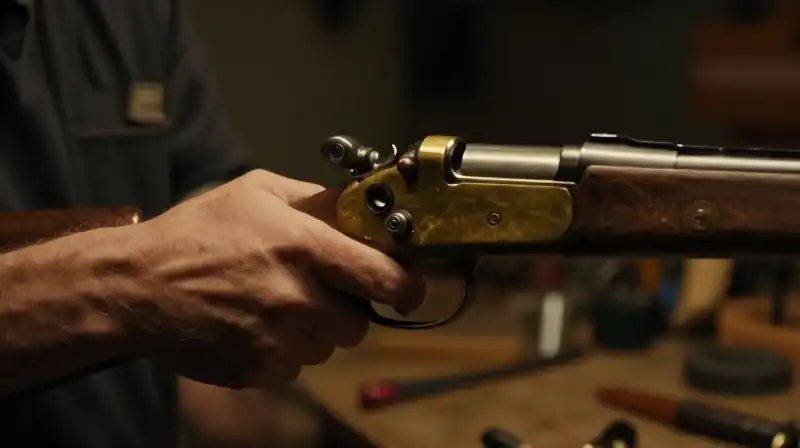

Why Dry Firing a Bow is Dangerous: The Mechanics of Damage

Introduction
Dry firing a bow is severely detrimental because the stored kinetic energy within the limbs has nowhere to be transferred. When the release occurs without a projectile, the full force and sudden deceleration of the bow snap back into the bow’s structure rather than being channeled forward. This uncontrolled, violent energy return subjects the entire system to massive internal stress that often exceeds the structural integrity of the components, resulting in permanent damage.
The Mechanics of Damage: Energy Dissipation Without a Projectile
To understand why dry firing is so damaging, it is necessary to grasp how a functional bow manages stored potential energy. In a properly executed shot, the potential energy accumulated as the archer draws the bow is transferred into the arrow, accelerating it at release. The arrow’s mass acts as a crucial buffer, smoothly absorbing and dissipating that energy. >When the projectile is absent, however, there is no buffer. The energy release occurs as a sudden, intense “snap.” This energy, which should be traveling forward, is instead violently converted back into vibration and shockwaves within the bow’s limbs, cables, and mounting hardware. This process causes excessive, untargeted strain.
Vulnerability by Material: Wood vs. Modern Bows
The susceptibility to damage varies significantly depending on the bow’s construction materials:
Wooden Bows
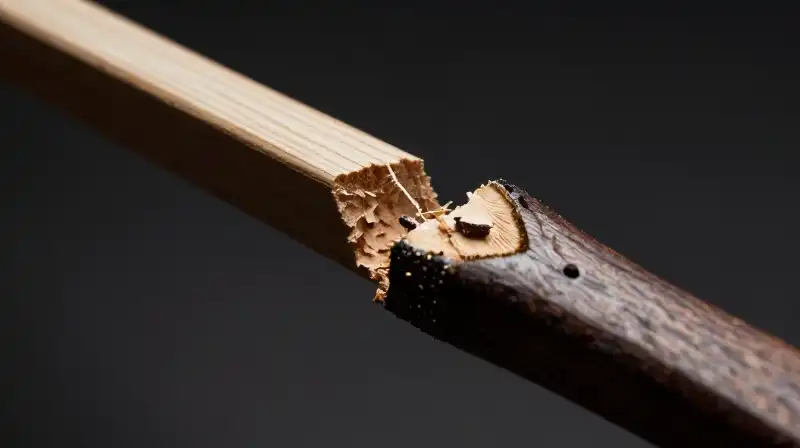
Wooden bows are particularly vulnerable to dry firing due to the inherent anisotropic properties of their natural materials. The sudden, intense stress caused by the uncontrolled energy return—a phenomenon of massive internal shock—can lead to:
- Cracking along the grain.
- Delamination (splitting of layers).
- Loss of tuning and “feel.”
Modern and Composite Bows
Modern high-speed bows utilizing fiberglass, advanced carbon, or metal risers are significantly more resilient. These materials are specifically engineered to handle multiple cycles of high stress. While modern bows are more durable, they are not immune. Repeated dry firing can still compromise the tension in the limbs or stress the mounting points.
Specific Component Failures: Cams, Crossbow, and Risers
While limb failure is possible on any bow, dry firing poses unique risks to more complex designs:
Compound Bows
Compound bows, with their intricate system of cams, wheels, and cables, are highly susceptible to damage from dry firing. The sudden shock can cause:
- Derailment of the bowstring or jump-off of the cams.
- Physical bending or snapping of the cam wheels and their associated linkages.
- Failure or stretching of the specialized cables and pulleys due to the immediate, uncontrolled deceleration.
Crossbow Components
Crossbow components are also vulnerable to the sudden deceleration of the bow limbs. The “kick” or shock often results in hardware failure, including broken or bent limbs, or damage to the sight mounts and internal draw mechanisms.
Addressing Common Dry Fire Questions
What is wrong with dry firing? (Synthesis of Risks)
>The primary issue with dry firing is the creation of destructive stress where there should be smooth energy transfer. The result is a cumulative degradation of the bow’s structural integrity. Even if no physical cracks are immediately visible, the bow may become untuned, leading to poorer accuracy and performance upon actual shooting.
Is it OK to complete a dry fire with a bow?
>No. Safety protocols universally dictate that a bow should never be released or pulled unless it has a properly weighted and fully attached arrow. Attempting a dry fire violates fundamental safety guidelines and is a guaranteed way to damage the equipment.
What happens if you accidentally dry fire a crossbow?
>Similar to other bows, a dry fire can cause structural failure. The sudden shock can lead to broken limbs, compromised tension in the draw string, or displacement of components. Because of the potentially high energy stored, this type of failure can be unpredictable.
Critical Safety Protocols and Prevention
Preventing dry firing involves rigorous adherence to operational standards and managing human error:
The Critical Role of the Projectile
>Ensuring the arrow is fully nocked and properly weighted is a critical prerequisite for safe and effective operation. The presence of a correctly prepared arrow is the system’s essential mitigating factor, preventing the catastrophic transfer of energy back into the bow structure.
Mitigating Human Error
>Accidents occur when judgment is compromised or proper supervision is lacking. Users must maintain a high level of situational awareness. Furthermore, for high-powered or complex bows, pulling the bow without a loaded arrow risks “string derailment,” which can cause severe localized damage even more impactful than a full dry fire.
Practical Precautions Before Shooting
Before any serious use of your bow, evaluate the equipment for the following:
- Check for limb integrity: Inspect all limbs for hairline fractures or subtle stress marks.
- Verify the attachment: Ensure the arrow is seated deep and the string is securely attached.
- Maintain tuning: If the bow has been subject to dry firing, professional tuning is necessary to ensure consistent performance and structural safety.
In summary, while dry firing might seem like a minor mistake, it subjects a precise piece of mechanical engineering to destructive forces it was not designed to absorb. The inherent energy transfer mechanism of a bow depends entirely on the forward momentum provided by a projectile; without it, the bow undergoes a violent, self-induced shockwave. For long-term safety and equipment longevity, always operate your bow with a properly loaded arrow in place.
Frequently Asked Questions
Is it OK to complete a dry fire with a bow?
No, it is not okay to complete a dry fire with a bow. Safety protocols dictate that a bow should never be released or pulled without a properly weighted and fully attached arrow, as dry firing violates safety guidelines and is a guaranteed way to damage the equipment.
What happens if you accidentally dry fire a crossbow?
Accidental dry firing of a crossbow can lead to structural failure, such as broken limbs, displacement of components, or compromised draw string tension. Due to the potentially high energy stored, this type of failure can be unpredictable.
What is wrong with dry firing?
Dry firing subjects the bow to destructive stress because the sudden energy release, lacking a projectile buffer, violently converts energy back into vibration and shockwaves. This lack of a buffer causes a cumulative degradation of the bows structural integrity, resulting in massive internal stress and potential permanent damage.
How to take practical precautions before shooting a bow
Check for limb integrity
Inspect all limbs for hairline fractures or subtle stress marks.
Verify the attachment
Ensure the arrow is seated deep and the string is securely attached.
Maintain tuning
If the bow has been subject to dry firing, professional tuning is necessary to ensure consistent performance and structural safety.
Related Articles