

How Low Art and High Art Blurred in Modern Culture

Introduction
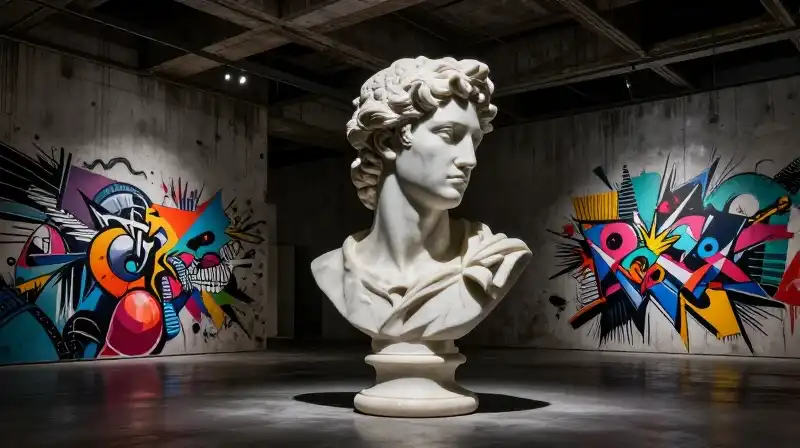
The traditional categorization of art into “high art” and “low art” has long served as a social and cultural barometer, distinguishing between works perceived as refined and valuable versus those deemed purely commercial or popular. Yet, the rigid lines separating these categories are rapidly dissolving. Modern culture, driven by technological evolution and critical redefinition, has fundamentally challenged the notion that art’s merit depends on its perceived socioeconomic status or original intended audience. Understanding how these categories blurred requires examining the historical origins of the division, the deliberate movements that sought to challenge it, and the pervasive influence of digital media.
Defining the Traditional Dichotomy
To appreciate the blurring, one must first grasp the established differences between the two concepts. These terms describe not just aesthetic qualities but also the societal value and intended consumption of a work.
High Culture vs. Low Culture
High culture and low culture are often used interchangeably, but they carry distinct characteristics based on accessibility and perceived refinement.
- High Culture: Traditionally appeals to smaller, often upper-class segments. It encompasses works like Renaissance paintings, classical sculpture, serious literature, and complex, high-minded films. The thematic content often favors deep, esoteric meaning and intellectual complexity.
- Low Culture: Characterized by mass appeal and designed for broad consumption, primarily targeting middle or lower socioeconomic classes. Materials used in low culture are often inexpensive and easily accessible, facilitating wide dissemination. Its thematic focus tends to be on relatable, familial, or individual working-class values, and accessible emotional escapism.
The Artistic Definitions: High Art vs. Low Art
While the culture terms focus on audience and scale, the art terms focus on the *nature* of the work.
Historically, the distinction was based on perceived respectability. Low art traditionally referred to genres considered less refined, such as pulp fiction or blockbuster action films, often defined as being created primarily for immediate commercial appeal or consumerism. Conversely, high art emphasized serious, lasting value through deep thought or strong emotion, regardless of genre.
The Historical Roots of the Divide
The separation of high and low art was not an accidental phenomenon; it evolved from specific social and artistic movements.
The Arts and Crafts Movement and Status
The conceptual split began partly with movements like the Arts and Crafts movement. This movement reacted against mass production, championing classical methods and artisanal methods over industrial, decorative arts. This created a foundational split: on one side, the “serious” classical disciplines (painting, sculpture), and on the other, the functional or decorative arts that catered to general public consumption.
Social Status and Habitus
For centuries, socioeconomic status heavily dictated who could access and appreciate certain types of art. The concept of habitus explains how an individual’s ingrained habits and class background influences their personal response to the social world—meaning a segment of society was culturally equipped (or expected) to respond to high-minded, classical narratives, while others were drawn to more immediate, relatable content.
The Intellectual Challenge: Why the Lines Started Blurring
The critical breaking point occurred when artists began deliberately subverting these established boundaries, shifting the focus of art from technical mastery or commercial viability to concept.
The Ready-Made and Conceptual Shift
The late 19th and post-World War I eras saw pivotal figures actively challenging traditional definitions. Artists like Marcel Duchamp famously incorporated commonplace, mass-produced objects into masterworks (the ready-mades). This act was a radical statement: it argued that the *idea* behind the work, not its material value or craftsmanship, should determine its artistic merit.
Lowbrow Art and Underground Movements
The rise of movements like Lowbrow art further fragmented the established hierarchy. Lowbrow art emerged as an underground genre that incorporated elements from traditionally low-culture forms—such as graffiti, comic books, and pulp genres—into formal artistic practices. This served to validate forms that were previously dismissed as vulgar or lacking in depth.
Modern Convergence: Technology and Revaluation
The most significant blurring today is driven by digital technology and the changing institutional landscape.
Digital Culture and New Form Categories
The evolution of digital technology has introduced entirely new art forms, most notably meme art. These ephemeral, highly sharable pieces are products of mass, instant digital communication (low culture) yet are now being showcased and analyzed in high-brow academic settings and major galleries. This shows that “art” is increasingly defined by the ability to trigger thought or emotion, rather than the genre itself.
Institutional Revaluation
Museum practices have shifted dramatically. Works that were once considered mass-produced, decorative styles, or cheap pop culture artifacts are now routinely acquired and displayed in major institutions. This recontextualization validates the quality and cultural significance of low-culture objects, proving that their artistic value is not dependent on their original commercial classification.
It is critical to note that while low culture is easily consumed by the general public, many of these forms possess superb craftsmanship or powerful thematic resonance that rivals traditional high art. The difference is increasingly in the institutional recognition, not necessarily the inherent quality of the work.
Understanding Low Art Characteristics and Examples
When discussing low art, it is useful to categorize its key features, whether it is focusing on pure aesthetics (Low Art paintings) or overall cultural phenomenon (Low culture examples).
| Characteristic | Focus | Typical Examples |
|---|---|---|
| Mass Appeal/Accessibility | Broad audience reach. | Internet memes, reality television. |
| Commercial/Functional | Designed for consumerism or decoration. | Surface pattern design (textiles), pulp fiction. |
| Relatability/Emotion | Focus on fundamental human experiences. | Blockbuster cinema, certain forms of graphic novels. |
Conclusion: The Future of Cultural Criticism
The contemporary view advocates for accessibility over rigid classification. The notion of a fixed “high” or “low” art is largely arbitrary; it is a moving target dictated by the era and the observer. The focus must shift from *where* the art came from (the market, the gallery, the street) to *how* it functions—whether it triggers significant personal reflection, sparks strong emotion, or motivates thought. The boundary between low art and high art is not a wall, but a permeable field, inviting continuous reinterpretation and evolution.
Frequently Asked Questions
What is the story "A Low Art" all about?
Low art traditionally refers to works considered less refined, often created primarily for immediate commercial appeal or consumerism. Its thematic focus centers on relatability, accessible emotional escapism, and broad mass consumption.
Related Articles