
Lager vs. Stout: Which Beer Profile is Right for You?

Introduction
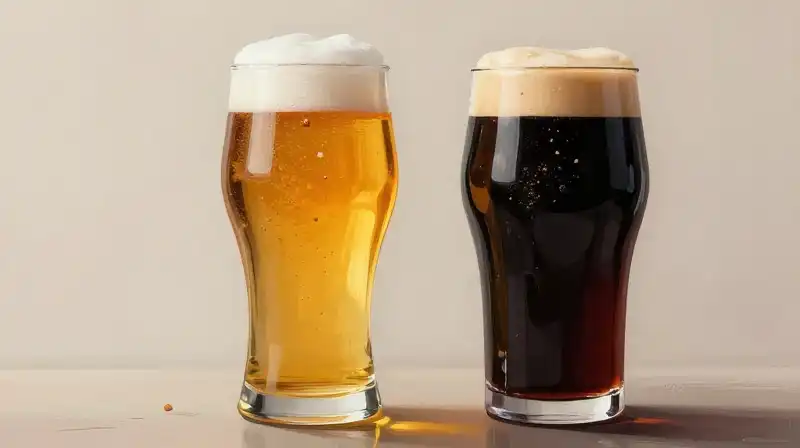
Choosing between a lager and a stout usually comes down to a preference for clean refreshment versus deep, roasted complexity. While both are celebrated beer styles, they represent opposite ends of the brewing spectrum regarding temperature, taste, and fermentation process. A lager offers a crisp, crisp, and subtle profile, designed to be highly refreshing, while a stout delivers a robust, rich experience characterized by dark, malty flavors akin to coffee or chocolate. There is no objective “better” beer; the ideal choice depends entirely on the flavor journey you seek.
Understanding the Fermentation Divide: Lager vs. Stout Processes
The fundamental difference between these two styles lies in how the yeast works and the temperature of the process. This is the core of why their flavors diverge so sharply.
Lager Process: Lagers utilize bottom-fermenting yeast that requires a long, slow, and cool fermentation. Brewers control the temperature precisely (typically low), allowing the yeast to work patiently. This cool process results in highly filtered, incredibly clean flavors. Stout Process: Stouts, often brewed with a focus on roasted barley, typically undergo top-fermentation at warmer temperatures. This method allows for the development of the heavier, more intensely flavorful malt profile that defines the stout.
| Feature | Lager | Stout |
|---|---|---|
| Fermentation Temperature | Cool (Controlled low temperatures) | Warmer (Traditional top-fermentation) |
| Flavor Profile Goal | Clean, crisp, subtle, highly refreshing | Rich, dark, full-bodied, intensely flavorful |
| Key Sensory Experience | Smooth, dry, highly drinkable | Velvety, assertive, robust |
The Profile of a Lager: Crisp and Clean Elegance
Lagers are the gold standard for those seeking a light, clean, and highly palatable drinking experience. They prioritize clarity and refreshment.
The taste of a quality lager is defined by its lack of harsh edges. Because they undergo extended cold fermentation, unwanted harsh yeast byproducts are minimized, leading to a smooth, often delicate flavor profile. While some lagers, such as a Pilsner, feature a noticeable hop bitterness, the overall impression remains bright and crisp rather than heavy and dark.
- Taste: Light, crisp, clean, often with subtle floral or citrus notes.
- Mouthfeel: Light, quenching, and easy to drink.
- Best For: Warm weather, pairing with lighter foods (like grilled meats or cheese boards), or as a highly repeatable everyday beverage.
The Profile of a Stout: Roasted Depth and Intensity
If flavor complexity and a heavy, satisfying mouthfeel are your priorities, stout is the definitive choice. Stouts utilize heavily roasted malts, which are essentially malt that has been carbonized to produce flavors similar to dark coffee, chocolate, or caramel.
The presence of roasted malts gives stouts their deep, characteristic color and high flavor intensity. While they can vary widely in alcohol content, most stout types are designed to be savored, offering a robust, sometimes creamy texture (mouthfeel) and a complex flavor arc that lingers after the last sip.
- Taste: Deep, roasted, bitter (from the malt/hops), sometimes sweet and complex.
- Mouthfeel: Full-bodied, creamy, heavy, and satisfying.
- Best For: Cooler weather, pairing with rich or decadent foods (cheesecakes, pork ribs, chocolate desserts), or savoring as a statement beer.
Selecting Your Beer: Addressing the Decision Criteria
To determine which beer profile is right for you, consider these practical scenarios. The question, “Is stout better than lager?” can only be answered by aligning the beer with your current mood or palate.
If your goal is thirst-quenching and simplicity, the lager is the correct selection. If you are looking for a beer that provides a profound, deep flavor experience, the stout is the winner. The key lies in defining what you want the beer to achieve during the experience.
Practical Decision Guide:
| Your Palate Preference | Choose Lager if… | Choose Stout if… |
|---|---|---|
| Desired Finish | You want a clean, subtle, and light finish. | You want a rich, complex, and lingering flavor. |
| Flavor Intensity | You prefer subtle notes over bold assertions. | You crave bold, coffee-like, roasted, and heavy flavors. |
| Ideal Occasion | Casual drinking, hot weather, or large groups. | A special occasion, dessert pairings, or cooler evenings. |
Clarifying Related Styles and Misconceptions
Consumer confusion often arises when trying to differentiate related styles, such as comparing a lager to an IPA, or misunderstanding the relationship between beer and lager. It is important to clear these common points of confusion.
Pilsner vs. Lager: A Pilsner is not an entirely different category; it is a specific sub-style of lager. It shares the same cool, bottom-fermentation process but is defined by having a heavier, more noticeable hop presence compared to a standard, subtle lager. It is still fundamentally a crisp, refreshing lager.
Misconceptions about Strength: A common myth is that certain beer styles are inherently stronger than others. This is incorrect. Beer strength and flavor intensity are entirely dependent on the brewer’s recipes and specific batch chemistry. A low-alcohol stout can be less intense than a high-alcohol lager, and vice versa. Do not assume a style guarantees a certain ABV.
Lager vs. Beer: While every lager is a type of beer, not every beer is brewed as a lager. “Beer” is the broad category, encompassing ales, lagers, stouts, and every style in between. “Lager” is a specific technique and style.
Synthesis: Choosing Your Beer Experience
The selection between lager and stout is a choice of experience. If the priority is the feeling of refreshment and the pleasure of a clean, bright sip that complements a wide range of foods, the lager delivers that crisp finish. If the goal is to engage with a beer that tastes as much like a gourmet coffee or dark chocolate as it does like fermented grain, the robust, dark body of a stout is the ideal companion. Ultimately, understand that you are choosing between lightness and richness, between subtlety and intensity.
Frequently Asked Questions
Is stout better than lager?
There is no objective better beer between a stout and a lager, as the ideal choice depends entirely on the flavor journey you seek. A lager offers a crisp, clean, and refreshing subtlety, while a stout provides a rich, deep complexity characterized by dark, roasted flavors.
How to choose between Lager and Stout
Consider your desired finish
Determine if you want a clean, subtle, and light finish (Lager) or a rich, complex, and lingering flavor (Stout).
Assess flavor intensity preference
Decide whether you prefer subtle notes over bold assertions (Lager) or crave bold, coffee-like, roasted, and heavy flavors (Stout).
Identify the ideal occasion
Determine if the drink is for casual drinking, hot weather, or large groups (Lager), or if it's for a special occasion, dessert pairing, or cooler evenings (Stout).
Related Articles