Artificial Banana Flavor: Mimicking the Taste of Extinct Gros Michel

Introduction
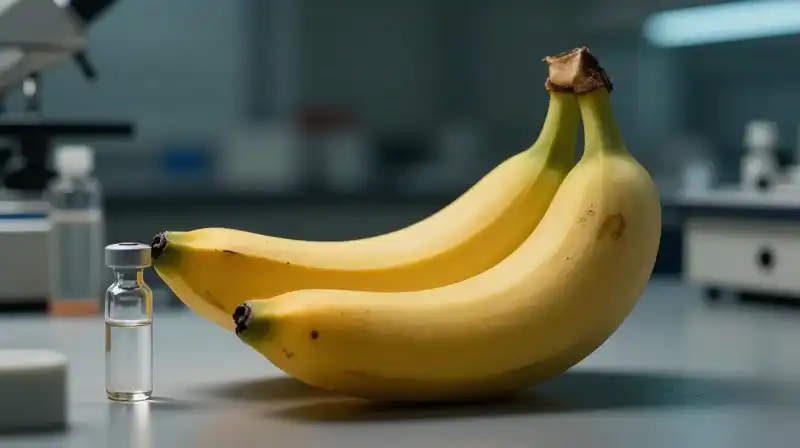
The common misconception surrounding artificial banana flavor is that it is somehow derived from, or is a direct replica of, an “extinct” banana variety. In reality, the artificial flavor itself does not originate from a specific fruit, but from a chemical compound: isoamyl acetate. This synthetic ester is the primary element used to mimic the signature aroma and taste of bananas. While the modern flavor profile often evokes the complex taste of the historical Gros Michel variety, the flavor is a chemical approximation of a specific profile, rather than a biological sample of an extinct fruit. Understanding the relationship between these flavor compounds and banana history requires looking at both chemistry and agricultural evolution.
The Role of Isoamyl Acetate in Banana Flavor
The characteristic “banana smell” and taste are largely attributable to specific volatile organic compounds, with isoamyl acetate standing out as the most crucial. Isoamyl acetate is a naturally occurring ester, a type of chemical compound formed from the reaction between an alcohol and a carboxylic acid. While it is found naturally in ripe bananas—and is indeed the component that gives the fruit its specific scent—it is an ingredient that chemists can isolate and synthesize. When food manufacturers create artificial banana flavorings, they are not replicating the whole fruit; they are replicating the chemical signature. The flavoring is a carefully balanced blend of various esters and compounds, designed to trick the human brain into perceiving the taste of banana. Therefore, the “artificial” aspect is a function of chemical engineering, not of fruit scarcity.
Gros Michel: The Historical Flavor Benchmark
The discussion of an “extinct banana flavor” typically refers to the commercial dominance and subsequent decline of the Gros Michel variety. The Gros Michel was the dominant global export banana variety through the mid-20th century, prized for its robust growth structure and thick, resilient peel. Its importance is tied to its unique flavor profile. Historically, consumer and industry observations suggested that Gros Michel possessed a flavor that was more amplified, distinct, or pronounced compared to the varieties that succeeded it. The Gros Michel was not merely a commercial staple; it was the flavor benchmark that subsequent cultivars had to measure themselves against. The dramatic decline of the Gros Michel was not due to biological disappearance in a local sense, but rather commercial extinction. In the 1950s, it was decimated by the spread of Panama Disease, caused by the fungus *Fusarium oxysporum f.sp. cubense*. This fungus spread rapidly, making the Gros Michel variety severely vulnerable and necessitating a global shift to disease-resistant alternatives like the Cavendish.
Why the Artificial Flavor Mimics the Past
If artificial banana flavor relies on the natural compounds found in bananas, why is it often described as mimicking the historical Gros Michel? The answer lies in the concentration of specific ester compounds, particularly isoamyl acetate. Historical analysis suggests that the Gros Michel cultivar naturally contained a higher concentration of isoamyl acetate compared to the modern, genetically modified Cavendish. Because isoamyl acetate is the primary ester responsible for the characteristic “banana” taste, the perception is that older or specific formulations of artificial banana flavor evoke a taste closer to the robust profile of the Gros Michel. This higher concentration of the defining chemical gives the flavor a perceived “amplified” quality. The current widely recognized flavor profile of the commercial banana is largely established by the Cavendish, which is the result of centuries of selective breeding for disease resistance and transport durability. The shift in flavoring reflects this shift in agricultural dominance.
The Limits of Chemical Mimicry
It is critical to understand that artificial banana flavor provides a chemical approximation, not a complete sensory replication. A flavor profile addresses taste (what the tongue perceives) and aroma (what the nose perceives). However, the full sensory experience of a natural banana includes complex factors that chemicals cannot fully replicate:
- Texture and Mouthfeel: The specific fibrous quality and the way the pulp breaks down naturally.
- Volatile Complexity: A natural banana contains hundreds of volatile compounds, not just the esters. Chemical flavorings often simplify this complexity into a core “banana” note.
- Nutrient and Biological Interaction: The chemical reaction of the fruit with the body.
When you taste artificial banana flavor, you are experiencing a targeted chemical snapshot of a key flavor component—a powerful mimic. You are not experiencing the nuanced, multi-layered biological experience of eating a historical banana.
Artificial Flavor vs. Biological Origin: Clarifying the Confusion
The “extinction” surrounding banana flavor is a semantic distinction that often causes confusion. * **Biological Disappearance:** The Gros Michel is technically still grown in certain non-infected regions, meaning it hasn’t completely vanished from the planet. * **Commercial Disappearance:** It is “extinct” in the context of global agriculture because its vulnerability to Panama Disease made it commercially unsustainable as a primary export crop. * **Flavor Source:** The flavor itself is based on a *chemical structure* (isoamyl acetate), not the physical remnants of a vanished fruit. In essence, the artificial flavor acts as a culinary time machine, recreating the essence of a historically important, yet commercially lost, flavor characteristic.
When assessing commercial products, the quality of an artificial banana flavor depends on how accurately the manufacturer balances the isoamyl acetate and other esters against the target profile, often aiming for the richer, more defined taste associated with the Gros Michel era, rather than simply replicating the modern, more mild Cavendish taste.
Frequently Asked Questions
What happened to the flavor of bananas?
The Gros Michel variety, which possessed a pronounced flavor due to a higher concentration of isoamyl acetate, became commercially extinct in the 1950s because it was devastated by Panama Disease. Consequently, modern artificial banana flavorings often aim to replicate this historical, robust taste profile.
Related Articles