Which Sushi Caviar Should You Choose? Guide to Varieties and Uses

Introduction
Choosing the right sushi caviar depends less on a single “best” product and more on the intended flavor profile and the specific dish it is intended to enhance. Sushi caviar, comprised of glossy beads derived from fish roe, serves a dual purpose: providing a unique textural contrast and delivering a vibrant visual pop. While traditional sturgeon or fish roe offers a luxurious richness, accessible varieties like tobiko and masago provide color, crunch, and flavor versatility. The right selection elevates a dish, while an incorrect match can overwhelm the delicate flavor of the fish.
Understanding the Key Varieties of Sushi Caviar
To make an informed decision, it is essential to differentiate between the primary types of roe available, as each has distinct flavor, texture, and aesthetic properties.
Traditional Caviar (Fish Roe): This category refers to roe from specific fish or sturgeon, offering the most decadent experience. It is prized for its complex, savory, and rich flavor, making it ideal for highly specialized or high-end nigiri creations where the goal is a luxurious mouthfeel.
Tobiko (Flying Fish Roe): Tobiko is the most versatile and popular option. Unlike traditional caviar, it is available in numerous colors and flavor profiles, allowing chefs significant creative freedom. It offers a satisfying pop of texture and can be utilized to add visual appeal across various types of sushi rolls and maki.
Masago (Capelin Roe): Masago is characterized by its tiny, uniformly orange eggs. It is generally considered a more accessible and budget-friendly alternative to colorful tobiko. Its primary strength lies in its vivid color and subtle crunch, making it excellent for adding volume and a bright visual element to simple rolls.
Comparison of Roe Varieties
| Variety | Origin/Source | Primary Flavor Profile | Best Usage Scenario | Aesthetic Impact |
|---|---|---|---|---|
| Tobiko | Flying fish roe | Versatile (can be natural, salty, or flavored) | Creative garnishes, complex rolls | High (available in red, orange, green, black) |
| Masago | Capelin fish roe | Mild, subtly savory | Simple rolls, color accent | High (bright orange) |
| Traditional Caviar | Various fish/sturgeon | Rich, decadent, savory | Premium nigiri, high-end presentation | Luxurious (visual richness) |
Strategic Usage: Matching Caviar to Sushi Style
The application of your chosen caviar dictates how you should manage its flavor and placement on the dish.
Nigiri Applications
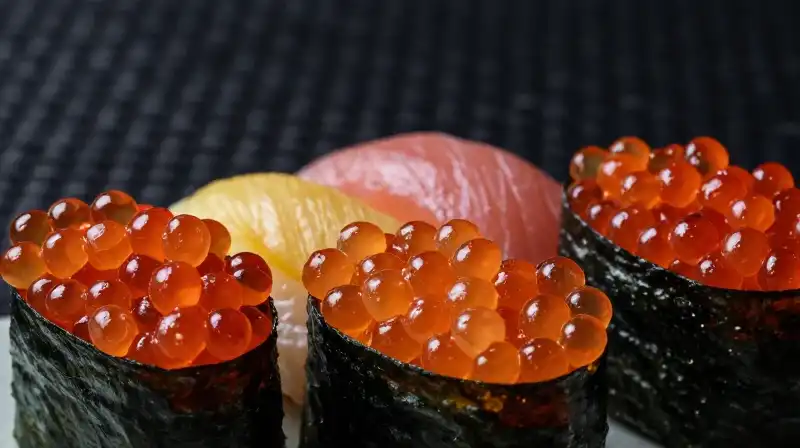
When pairing roe with nigiri, the goal is complementary luxury. Traditional fish caviar or high-quality, rich-flavored tobiko is preferred here. The small amount of roe should be positioned delicately on top of the slice to provide a concentrated burst of flavor without overpowering the delicate texture of the fish. Over-application here is a common mistake, as the intensity of the roe can quickly dominate the subtle taste of the premium fish.
Roll and Maki Applications
For sushi rolls, versatility is key. Here, colorful tobiko or masago are most effective, providing both visual appeal and structural crunch. The roe can be dispersed throughout the roll or used as a vibrant external garnish. Because rolls often incorporate stronger ingredients like sauces and seasoned rice, the roe is generally used as an accent rather than the dominant flavor element.
Garnishing and Fusion Plates
For experimental or fusion sushi, the high aesthetic diversity of tobiko allows for complex design. Using black-flavored tobiko, for instance, creates a striking contrast against the white rice, while green-flavored roe can echo wasabi notes. These varieties are used less about the traditional fish flavor and more about contributing a unique textural element and visual drama to the plate.
How to Evaluate and Select Quality Sushi Caviar
The quality of the roe profoundly affects the dining experience. Choosing high-grade caviar is essential to distinguish a luxurious experience from a merely decorative one.
Freshness and Integrity: Genuine, high-quality roe should be vibrant and glossy. Avoid options that appear dull, overly cloudy, or have an unusually strong, artificial scent. The roe should maintain its structural integrity when handled.
Flavor Profile Check: While some roe is naturally saline, premium varieties offer a distinct, clean, and complex oceanic flavor, not merely saltiness. If the flavor profile seems overly synthetic or aggressive, it may contain artificial additives or be low-grade.
Beware of Imitations: A crucial distinction must be made between genuine fish roe and synthetic alternatives. Some garnishes are colored using squid ink or other dyes to mimic the appearance of roe, but these alternatives lack the distinct flavor and texture of actual fish roe. Always verify the source and ingredients, particularly when purchasing from smaller vendors, to ensure you are acquiring genuine sushi caviar.
Practical Limits and Flavor Balance
A common pitfall when using sushi caviar is neglecting the balance of flavors, especially when combined with soy sauce.
The Saltiness Warning: Both traditional caviar and seasoned tobiko are naturally salty. When combined with concentrated soy sauce—a staple of sushi—the salt level in the mouth can quickly become excessive. To prevent this, use soy sauce sparingly or opt for a less saline variety of roe.
Balancing Richness: When pairing rich, traditional roe, ensure the underlying fish is of high quality. The intensity of the roe should *complement* the fish’s flavor, not mask it. If the caviar is overpowering the fish, it indicates an imbalance in the flavor ratio or a potentially over-applied serving of the roe.
Summary of Selection Criteria
When deciding which sushi caviar to choose, consider these practical criteria based on your desired outcome:
For Decadence and Luxury: Opt for traditional, high-grade fish caviar (if budget allows) and pair it with premium, delicate fish on nigiri.
For Color and Versatility (Most Recommended): Choose brightly colored tobiko (red, orange, green) and use it liberally in creative rolls or as a visual garnish, leveraging its flavor complexity.
For Accessibility and Texture: Select masago for budget-friendly, uniform crunch in simpler, classic rolls.
General Rule: Always prioritize quality over quantity. A small amount of high-grade roe provides maximum flavor impact without risking overwhelming the delicate flavor of the sushi.
Frequently Asked Questions
Which caviar is used for sushi?
Various types of sushi caviar are used, including traditional sturgeon or fish roe for luxurious, high-end nigiri creations. More versatile options like colorful tobiko and masago are often utilized in sushi rolls to add visual pop, color, and texture.
How to Evaluate and Select Quality Sushi Caviar
Check Freshness and Integrity
Examine the roe for vibrancy and gloss. Avoid options that appear dull, overly cloudy, or have an unusually strong, artificial scent, and ensure the roe maintains its structural integrity when handled.
Evaluate the Flavor Profile
Taste or observe the roe to confirm it offers a distinct, clean, and complex oceanic flavor, rather than being merely salty or smelling of synthetic additives.
Verify Authenticity
Always verify the source and ingredients to ensure you are acquiring genuine fish roe and avoiding synthetic alternatives or imitations colored with dyes.
Related Articles