Where Do Bugs Go During Winter? A Guide to Insect Survival

Introduction
When temperatures drop, bugs do not simply vanish; they implement sophisticated survival strategies tailored to their specific biology and environment. The perception that insects “disappear” during winter is largely due to their transition into states of dormancy, freezing, or migration. Whether they are a burrowing beetle, a dormant butterfly, or a deep-water aquatic nymph, the central question of where they go is answered by understanding how different species manage the extreme conditions of cold, food scarcity, and freezing temperatures.
Insect survival hinges on three primary modes of endurance: finding optimal shelter, utilizing physiological adaptation to withstand freezing, or entering a developmental pause. Understanding these mechanisms explains how an insect can endure months of winter, often hiding in plain sight within the typical landscapes of leaf litter or under tree bark.
Strategic Shelter: Finding Safe Havens
For most insects, the best defense against winter is a strategic location that maintains a more stable temperature and protects them from precipitation. The specific hiding place depends heavily on the insect’s natural habitat.
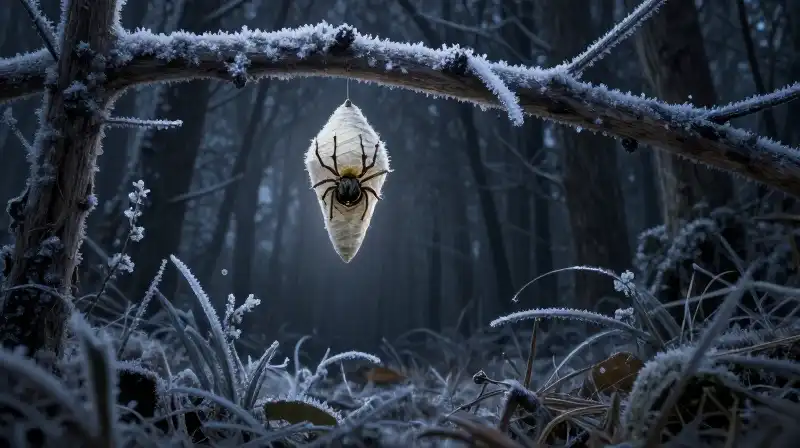
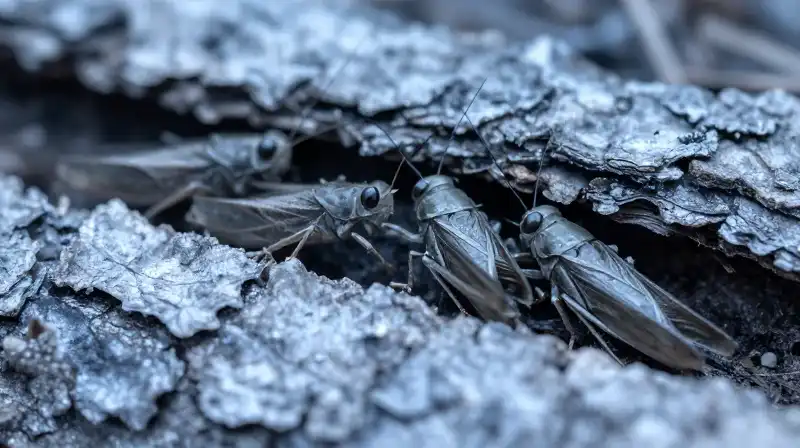
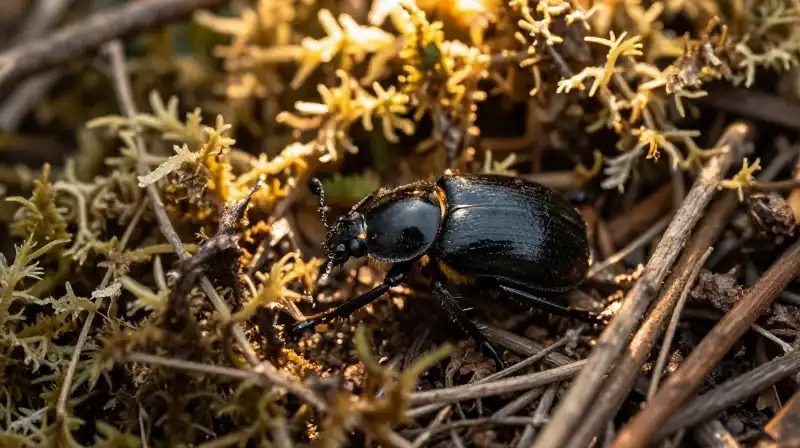
Ground-dwelling insects often seek protection beneath the soil surface, where the ground acts as a natural thermal buffer, keeping temperatures more consistent than the air. Arboreal species, those living in trees, commonly find refuge by residing within the protective layers of tree bark, under dense mats of accumulated leaf litter, or in hollow areas of old wood. These locations prevent rapid temperature fluctuations.
A significant portion of insects survive by entering specific life stages—eggs, larvae, pupae, or even dormant adult forms—which are inherently more resilient than active, mobile stages. These stages are often the primary overwintering bodies.
Physiological Adaptation: The Art of Surviving Freezing
While many insects simply hide, others possess remarkable internal biological mechanisms that allow them to withstand the cold directly. This is where physiological adaptation comes into play, differentiating them from those that merely hibernate.
Cryoprotection and Freeze Tolerance: Some insects actively prevent their cells from freezing by producing cryoprotectants, such as glycerol. These substances lower the freezing point of their body fluids, allowing them to survive sub-zero temperatures without cellular damage (freeze avoidance). In contrast, certain other species have evolved freeze-tolerant physiology. These insects use specialized antifreeze proteins, which protect their cell membranes while permitting parts of their bodies to partially freeze, a highly specialized survival technique.
Diapause vs. Hibernation: It is crucial to distinguish between these terms. Diapause is a specific type of arrested development—a pause in the life cycle—that allows insects to survive unfavorable environmental conditions, such as the lack of food or extreme cold. While humans often equate insect dormancy with hibernation, diapause is a precise biological state of suspended growth rather than a state of metabolic inactivity for an entire season.
The Environmental Context of Survival
The success of an insect’s winter strategy is dictated by its local climate and specific ecological niche. Not all insects face the same challenges.
Migration: A small percentage of species employ migration as their primary survival strategy. These insects travel to warmer climates, allowing them to bypass the cold season entirely. This is a complex energy-intensive decision, usually tied to large-scale population movements.
Aquatic Endurance: Many aquatic insects are able to remain active or dormant in cold months because, unlike air, colder water retains a higher level of dissolved oxygen. They utilize deep, relatively warmer bodies of water to remain viable while others freeze.
Temporal Synchronization: Many insects have their life cycles precisely timed. Their adults may emerge only after the sustained increase in temperature, a process linked to accumulating sufficient “degree days.” This ensures they are active only when resources are available to support their reproduction.
Why Do Bugs Disappear During Winter?
The most common reason people observe bugs seeming to disappear is that they have entered a deep state of dormancy or are in an inactive life stage.
1. Dormancy and Diapause: Many insects are in diapause or a state of torpor, meaning their metabolism is slowed to a near standstill. They are not dead, but they are completely inactive and often difficult to detect. 2. Deep Cover: As environmental conditions worsen, many insects move deeper into sheltered microclimates, such as under thick soil or beneath layers of decaying organic matter, making them invisible to casual observation.
Winter Survival Criteria: Choosing the Right Strategy
Understanding the decision criteria for winter survival helps differentiate species from one another. A practical assessment of how a bug survives depends on these factors:
- Habitat Dependence: Is the bug arboreal (needs bark/leaves), terrestrial (needs soil/undergrowth), or aquatic (needs stable water)?
- Physiological Capability: Does the species possess freeze-avoidance capabilities, or does it rely solely on behavioral shelter?
- Life Stage Timing: Is it surviving as a highly durable egg, or is it an active larva entering diapause?
- Climate Exposure: Does the local climate necessitate migration, or is the region stable enough for overwintering strategies?
Conclusion: Practical Precautions for Cold Weather Observation
The disappearance of insects in winter is a function of highly evolved biological necessity, not a simple cessation of life. Whether they are migrating, generating antifreeze in their tissues, or waiting patiently beneath the soil for the “degree days” of spring, every insect has optimized its existence for survival. If you are observing insect activity in cold weather, remember that the most robust survival tactics often involve those organisms that are the hardest to find—those perfectly integrated into their microhabitats, utilizing dormancy, and waiting for the thermal signals that will trigger the next phase of their life cycle.
Frequently Asked Questions
Why do bugs disappear during winter?
Bugs appear to disappear because they are often in a deep state of dormancy or diapause, where their metabolism is slowed, or they are hidden in sheltered microclimates like thick soil or leaf litter. Other species employ survival strategies by migrating to warmer climates or utilizing specialized physiological adaptations to withstand freezing.
Related Articles