How Do Spiders Survive Winter? The Science of Hibernation and Survival

Introduction
When the first hard frost arrives, many people wonder what happens to the millions of arachnids across the globe. Unlike mammals, spiders do not experience winter as a simple “sleep” period. Their survival during cold months relies on a variety of sophisticated, species-specific strategies, ranging from entering deep physiological stasis to seeking meticulously constructed microclimates. The core mechanism of spider survival is not just hiding; it is managing environmental stressors—primarily cold, desiccation, and predation—through metabolic reduction and strategic placement. Understanding these mechanisms reveals that the fate of a spider in winter is deeply dependent on its species, its life stage, and the specific microhabitat it occupies.
The Science of Dormancy: Hibernation Versus Diapause
The term “hibernating spider” is commonly used, but biologically, many arachnids enter a state called diapause. While both involve a period of reduced activity, diapause refers specifically to a dormant stage where growth and reproduction are arrested in response to unfavorable environmental conditions, such as freezing temperatures or lack of food. This is a survival mechanism, not merely a resting phase.
Physiological Preparedness
To survive temperatures that might kill most creatures, certain hardy species possess remarkable biological defenses. Some spiders have evolved to produce specific chemical compounds that act as biological antifreeze, preventing the formation of damaging ice crystals within their bodily fluids. When temperatures drop to lethal levels for the general population, the surviving individuals enter a state of suspended animation, slowing their metabolism to a crawl to require minimal energy.
If the temperature drop is too sudden or too extreme, even spiders capable of dormancy may perish. The key is surviving the transition period, or entering a deeper state of torpor before reaching the absolute freezing point.
Strategic Sheltering: Where Spiders Go in Winter
The most critical factor in spider survival is finding the right physical refuge. A safe winter habitat must provide three things: insulation, protection from wind, and critically, a level of dryness.
Spiders use the environment around them to establish these microclimates. Because their metabolism is low, they can tolerate small, stable temperature variations, but they require the physical barrier of a sheltered space.
- Natural Shelters: Under rocks, within crevices between stones, beneath thick debris, or inside hollow wood provide excellent protection. These areas buffer extreme temperature fluctuations.
- Human Structures (Indoor Survival): Many house spiders rely on humans for their winter home. Cracks in foundations, voids within attic insulation, gaps under baseboards, and undisturbed cabinets offer the perfect combination of dry, constant temperature, and predator protection. For many, this indoor refuge is safer than the unpredictable outdoors.
Life Stage and Survival Tactics
Not all spiders employ the same strategy. Their survival often depends on whether they are in a mature adult stage, a larval stage, or in their egg state.
Adult Spiders
A surviving adult spider typically remains in a sheltered location, remaining inactive until temperatures rise and food becomes available. Their primary goal is metabolic conservation. They will remain dormant, conserving energy until the spring signals a return to a viable hunting cycle. This behavior ensures they are ready to reproduce when conditions improve.
The Role of Eggs and Juveniles
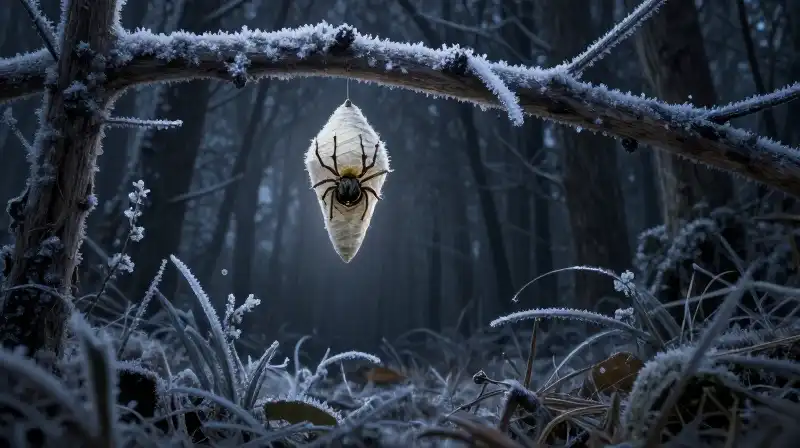
Eggs often rely on a different strategy than the adult. Many species leave their egg sacs in extremely sheltered, insulated locations—such as deep within bark, soil, or under accumulated leaf litter. These eggs can be highly resistant to the cold and may enter a state of diapause for years, waiting for the environmental cues of spring. Juvenile spiders, when smaller, may burrow deeper into the earth in search of warmer soil temperatures to survive the cold.
Addressing Specific Winter Concerns
A common confusion centers on whether all spiders die or what causes them to appear indoors during the cold months. Here are key clarifications on common queries:
| Question | Biological Reality |
|---|---|
| Do all spiders die off in the winter? | No. Many species survive via diapause or by entering a protective state in sheltered locations. Whether they die depends entirely on the cold’s severity and their access to insulation. |
| What causes spiders in the house in winter? | Many species, including house spiders and brown spiders, are seeking the warmest, driest, and most secure hiding spot available. Human dwellings provide an ideal, protected microclimate during freezing conditions. |
| Do cold winters kill off spiders? | Yes, extremely severe or prolonged cold, especially combined with deep moisture or a lack of suitable shelter, can be lethal. However, many are adapted to withstand typical seasonal dips. |
Practical Precautions for Homeowners
Understanding how spiders survive the winter can provide practical insight into managing indoor pests. Because many spiders seek shelter in your home to survive the cold outdoors, maintaining a tight seal around the structure is essential for exclusion.
To discourage winter pests:
- Seal Entry Points: Ensure that cracks in foundations, gaps around utility lines, and window seals are professionally addressed.
- Manage Debris: Keeping gutters clear and maintaining a “no pile” policy for leaves and yard debris around the house reduces the available habitat for spiders looking for winter protection.
- Avoid Damp Areas: Spiders prefer dry places. Ensuring that basements and crawlspaces are ventilated and dry minimizes their attraction to human structures.
Synthesis of Survival Strategies
Spider survival in the winter is a masterclass in adaptation. Whether they utilize biological antifreeze, enter a state of metabolic diapause, or simply find the most insulated crack in the concrete, their primary objective remains the conservation of energy. The biggest takeaway is that the successful spider is rarely the one in the open; it is the one found in a dry, protected, and stable microenvironment. This understanding shifts the perspective from seeing them as merely pests to recognizing them as survivors adept at navigating some of nature’s most extreme seasonal shifts.
Frequently Asked Questions
What causes spiders in the house in winter?
Many species of spiders are seeking the warmest, driest, and most secure hiding spot available to survive the freezing outdoors. Human dwellings provide an ideal microclimate, allowing them to find protected spaces like cracks and voids within the home.
Do all spiders die off in the winter?
No, not all spiders die in the winter, as many species survive through diapause or by establishing protective, sheltered microclimates. However, their survival depends entirely on the colds severity and their access to insulation.
How long does a spider hibernate?
While the article explains that spiders enter a state of diapause rather than simple hibernation, it notes that many species egg sacs can enter a state of diapause for years, waiting for the environmental cues of spring. Adult spiders generally remain dormant until temperatures rise and food becomes available.
Do cold winters kill off spiders?
Extremely severe or prolonged cold, especially when combined with moisture or a lack of suitable shelter, can be lethal. However, many species are adapted to withstand typical seasonal dips by entering diapause or seeking protected microclimates.
How to Discourage Winter Pests
Seal Entry Points
Address cracks in foundations, gaps around utility lines, and window seals professionally.
Manage Debris
Keep gutters clear and maintain a "no pile" policy for leaves and yard debris around the house.
Avoid Damp Areas
Ensure that basements and crawlspaces are ventilated and dry to minimize spider attraction.
Related Articles