
What does a car differential do? Function and types explained

Introduction
A differential is a critical mechanical gear arrangement located within a vehicle’s drivetrain. Simply put, its primary function is to allow the wheels on the same axle to rotate at different speeds. Without this mechanism, a standard axle would force both wheels to turn at the same rate, which is impossible when a vehicle needs to navigate a curve. The differential is the essential component that manages this speed difference, distributing power and ensuring the vehicle can successfully execute turns without severe wheel slip.
When you accelerate, turn, or travel over varied terrain, the differential constantly splits and manages torque. Its effectiveness determines a vehicle’s handling, stability, and ability to maintain traction. However, not all differentials function the same way. Depending on the driving conditions—whether it is high-speed highway cruising or challenging off-road performance—the specific type of differential installed can dramatically change how the vehicle behaves.
The Core Function: Navigating Turns and Managing Torque
The fundamental purpose of the differential is to solve a geometric problem: when a car turns, the outer wheel must travel a greater distance than the inner wheel. On a circular path, the inner wheel follows a smaller radius, requiring it to rotate slower than the outer wheel. If the wheels were mechanically locked together, the inner wheel would be dragged, causing it to skid, lose all traction, and potentially damaging the vehicle’s drivetrain components.
The differential acts as a mechanical buffer. It uses a set of internal gears to allow this speed disparity. By managing the rotational speed difference between the two wheels on an axle, the differential ensures the vehicle maintains control while allowing the wheels to follow their necessary paths during directional changes. Furthermore, it serves as the central mechanism for torque split, efficiently delivering power to the drive wheels regardless of whether the vehicle is front-wheel drive, rear-wheel drive, or all-wheel drive.
How Differentials Work: The Mechanics of Torque Split
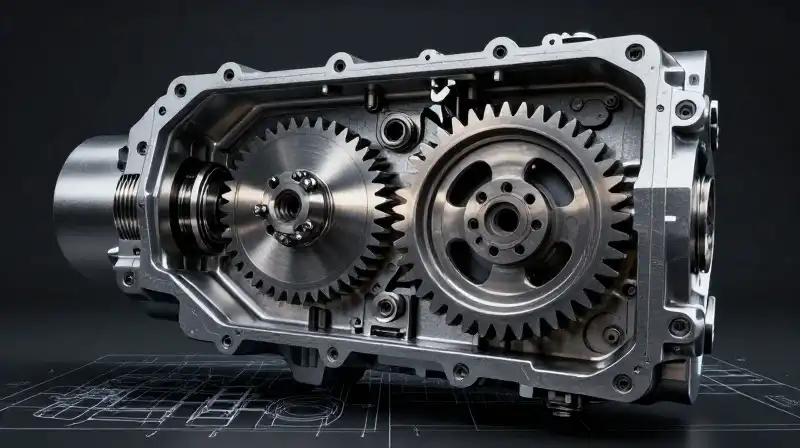
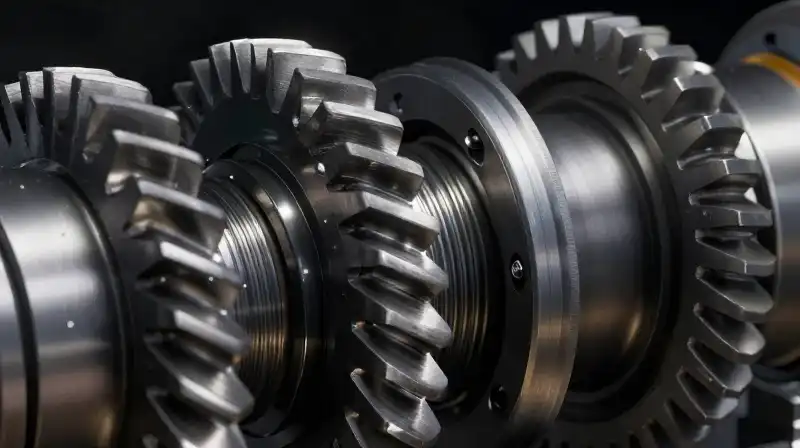
At its core, a differential is composed of three main groups of gears: the ring and pinion gears, the side gears, and the spider gears. The ring and pinion gear drives the entire system, while the spider gears (or pinion gears) sit between the side gears. When the wheels attempt to spin at different rates, the spider gears rotate around the center point, absorbing and accommodating the speed difference between the two sides of the axle. This complex interplay of gearing is what facilitates the torque split.
Different designs utilize this basic mechanical function in different ways. The type of differential installed—open, limited-slip, or locking—dictates how aggressively the mechanism intervenes when traction becomes uneven, making the choice critical for performance and safety.
Understanding the Different Types of Differentials
The functionality of the differential changes dramatically based on whether it is designed for efficiency (Open), controlled intervention (Limited-Slip), or maximum grip (Locking).
Open Differential: The Standard Setup
The open differential is the simplest and most common type found in everyday passenger cars. Its design is intended for efficiency and routine cruising.
Operation: An open differential is engineered to send power to the wheel that offers the least resistance. This sounds beneficial, but it has a significant limitation: if one wheel encounters a patch of low grip (like snow, mud, or a patch of oil), the engine torque is sent primarily to that spinning, non-traction wheel. This causes the wheel to spin uselessly while the wheel with grip receives little to no power, leading to a complete loss of drive.
Limited-Slip Differential (LSD): Controlled Performance
An LSD is a sophisticated upgrade designed to improve power delivery and maximize traction during dynamic driving conditions. It addresses the core weakness of the open differential by selectively restricting the degree to which the wheels can spin at different rates under stress.
Operation: LSD systems contain internal components—often clutch packs, viscous fluids, or specialized gear sets—that engage only when there is a substantial difference in the rotational speed of the two wheels. When one wheel begins to lose traction, the LSD mechanism increases the resistance on that wheel, forcing the slower, gripping wheel to spin faster and receive the bulk of the torque. This capability is essential for performance driving, racing, and all-weather conditions where maximizing torque transfer is vital.
Locking Differential: Maximum Traction
A locking differential is the most aggressive form of differential control, often found in heavy-duty trucks, dedicated off-road vehicles, or specialized racing applications. It completely overrides the normal function of the axle.
Operation: When engaged, a locking differential mechanically links both wheels, forcing them to rotate at the exact same speed. This guarantees that 100% of the torque reaches both driven wheels, maximizing traction. However, the trade-off is a severe restriction on maneuverability. By locking the wheels, the vehicle loses the ability of the inner wheel to follow a tighter arc, severely limiting the ability to turn or maneuver at slow speeds.
A related evolution is the Torque-Vectoring Differential, which uses sophisticated sensors and electronics to monitor grip levels in real-time, distributing power and braking forces dynamically between the axles to maximize performance and minimize wheel spin.
Practical Considerations and Common Issues
Addressing the user query “Can you drive a car without a diff?” the answer is technically no, not without replacing it with a functional mechanism. However, if a differential is worn out or damaged, the vehicle will perform poorly. If it is completely failed, the drivetrain may be unable to operate safely. Related concerns often involve:
- Driveline Noise: Common symptoms of a worn differential include grinding, clunking, whining sounds, or unusual humming coming from the axle area.
- Oil Leaks: Differential housing leaks are a sign of worn seals and require prompt repair.
- Maintenance: Regular differential service (checking fluid levels and viscosity) is crucial. The specific fluid used must match the vehicle manufacturer’s requirements to ensure the gears function correctly and prevent overheating.
Conclusion and Practical Synthesis
The car differential is far more than a mechanical novelty; it is a crucial component that dictates how a vehicle handles the physical reality of turning corners and varying terrain. Its primary role is to manage the speed differential required for successful navigation, while its secondary role is to control and distribute torque based on the driver’s needs and road conditions.
When selecting or maintaining a vehicle, the type of differential matters immensely: an open differential provides simplicity and efficiency for daily commuting; an LSD provides the necessary balance of grip and handling for spirited driving; and a locking differential provides ultimate grip for extreme off-roading, albeit at the cost of maneuverability. Understanding this functional hierarchy helps in deciding when a standard setup is sufficient and when a performance or specialized upgrade is required to avoid wheel slip and ensure maximum traction.
Frequently Asked Questions
What is the function of the differential?
The primary function of a differential is to allow the wheels on the same axle to rotate at different speeds, which is essential for the vehicle to successfully execute turns. It also serves as the central mechanism for managing and distributing torque to the drive wheels.
What is the main function of a differential?
The primary function of a differential is to allow wheels on the same axle to rotate at different speeds, which ensures a vehicle can execute turns without severe wheel slip. Furthermore, it serves as the central mechanism for torque split, efficiently distributing power to the drive wheels and managing the rotational speed difference.
What is the function of the diff?
The differentials primary function is to allow the wheels on the same axle to rotate at different speeds, which is necessary for the vehicle to successfully navigate curves. It acts as a mechanism for managing this speed difference and distributing torque and power to the drive wheels.
Related Articles