

Single Action vs Double Action Revolvers: Which Is Better?

Introduction
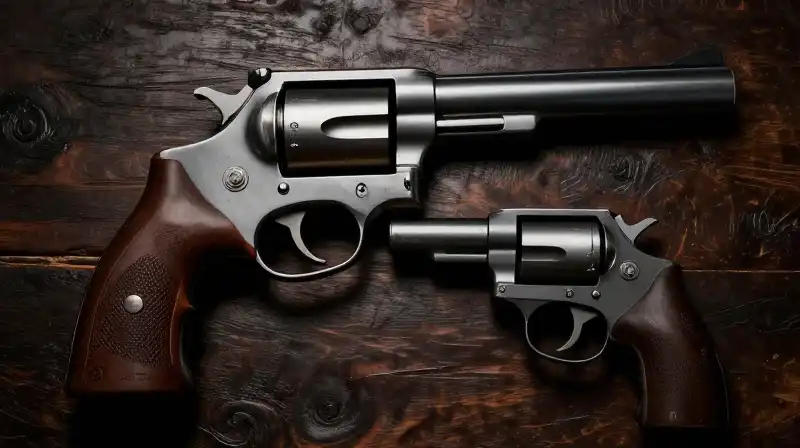
When choosing a revolver, the distinction between Single Action (SA) and Double Action (DA) determines the entire handling and operational philosophy of the firearm. The common question, “Is a single or double-action revolver better?” does not have a universal answer; the superiority of one design depends entirely on the intended purpose—whether that purpose is competition-level precision or rapid, reliable self-defense.
At the core, the difference is a fundamental shift in responsibility: in SA, the shooter manually cocks the hammer before pulling the trigger, which only releases it; in DA, pulling the trigger simultaneously begins the firing sequence by both cocking and then releasing the hammer.
Understanding Single Action Revolvers (SA) Mechanics
A single-action revolver is a deliberately mechanical device. Before the first shot can be fired, the user must physically manipulate the hammer back—a process called cocking. The trigger mechanism then functions as a simple sear release. This dedicated cocking phase is why SA revolvers often have an extremely light and short trigger pull.
The primary benefits of this design revolve around control and precision. Because the trigger pull is minimal and requires less force, it is easier for a shooter to maintain absolute control, which translates directly into higher potential accuracy, especially for target shooting and competitive shooting scenarios. A key safety element is that the weapon cannot fire unless the user has fully performed the manual cocking motion.
Pros of Single Action
- Superior Precision: Shorter, lighter triggers allow for finer aiming control.
- Controlled Handling: The manual sequence provides a mental “reset” between shots.
- Safety Profile: The hammer must be fully cocked before the trigger will release it.
Cons of Single Action
- Slower Rate of Fire: Every single shot requires a manual hammer reset and cocking.
- Increased Handling: Requires deliberate manual manipulation between shots.
Understanding Double Action Revolvers (DA) Mechanics
Double-action revolvers integrate the cocking and firing functions into a single trigger pull. When the user squeezes the trigger, the internal mechanism automatically advances the cylinder (if not already doing so), draws the trigger through the full travel distance, and cocks the hammer before releasing it to fire.
This design prioritizes operational speed and continuous readiness. DA revolvers are much faster for follow-up shots because the shooter does not need to manually cycle the weapon between rounds. The primary trade-off for this convenience, however, is the force required by the trigger pull. DA revolvers require significantly more pressure and involve a longer trigger travel distance, which naturally makes them less suited for the ultra-delicate control required in precision target practice.
Pros of Double Action
- Rapid Firing Sequence: Automatically cycles and cocks the hammer upon each pull.
- Consistency in Defensive Use: Immediate readiness makes them effective in high-stress, varied defensive applications.
- Simplified Operation: No manual cocking is necessary before the first shot.
Cons of Double Action
- Higher Trigger Force: Requires greater muscle strength to pull the trigger.
- Reduced Precision: The heavier pull makes achieving perfect control more difficult for some shooters.
Direct Comparison: Accuracy vs. Rate of Fire
The debate between single action vs double action revolver ultimately boils down to a functional choice between precision and practicality. Neither is inherently “better”; they are optimized for different tasks.
A quick comparison table illustrates the mechanical differences:
| Feature | Single Action (SA) | Double Action (DA) |
|---|---|---|
| Primary Function of Trigger | Release the hammer only | Cocking and releasing the hammer simultaneously |
| Trigger Pull | Short, light, highly controlled | Long, heavy, robust |
| Rate of Fire | Slow (requires manual reset) | Fast (automatic cocking) |
| Optimal Use Case | Target practice, competitive shooting | Self-defense, rapid deployment |
Choosing the Right Revolver for Your Application
When deciding between the two, consider your primary use case. If the goal is to win a championship or score bullseyes, the mechanical control of a single action revolver is the superior choice. However, if the goal is a reliable, immediate firearm that can handle rapid fire under duress, the automatic sequence of a double action revolver is advantageous.
Precision and Competition: If you are a competitive shooter, the SA design is usually preferred. The dedicated cocking action allows for greater focus and control on the shot. Some advanced SA revolvers even feature specialized sear modifications to achieve a near “hair-trigger” pull, further enhancing accuracy.
Self-Defense and Field Use: For many practitioners focusing on self-defense, the DA revolver offers a crucial advantage in immediate readiness. Since the weapon is ready to fire the moment the trigger is pulled, the operational speed is vital in unpredictable situations. Many DA models, especially those designed for concealment, may feature a shrouded hammer, as they do not rely on an exposed hammer for firing.
The Versatility of DA/SA Models
It is worth noting that many modern revolvers are produced as DA/SA models. These firearms possess a mechanism that allows the user to manually cock the hammer first (acting in Single Action mode) or simply pull the trigger (acting in Double Action mode). This versatility attempts to marry the best of both worlds, allowing the user to function in high-stress, rapid-fire scenarios or switch to the precision of a manual cocked shot when possible. However, even with this flexibility, the mechanical difference between the two operational modes remains distinct.
Final Synthesis: Making Your Decision
To determine which design fits your needs, weigh the trade-offs between the controllable, precision-focused SA and the rapid, automatically ready DA. If the limiting factor is the need for maximum accuracy and slow, measured control, choose Single Action. If the priority is immediate deployment and a higher capacity for sustained, rapid follow-up shots, choose Double Action. The decision rests on whether you require a carefully orchestrated mechanical process (SA) or an automatic, rapid-delivery mechanism (DA).
Frequently Asked Questions
Is a single or double-action revolver better?
Neither design is inherently better; their superiority depends on the users purpose, as single-action revolvers offer superior precision for target shooting and double-action revolvers prioritize rapid fire and immediate readiness for self-defense.
How to Operate a Single Action Revolver
Cock the hammer
Manually manipulate the hammer back to fully cock the internal mechanism.
Fire the weapon
Pull the trigger, which serves as a sear release to fire the gun, releasing the cocked hammer.
Related Articles