
FWD vs 4WD: Understanding the Key Differences in Drive Systems

Introduction
FWD and 4WD represent two fundamentally different philosophies in how a vehicle manages and distributes engine power. The drivetrain is the complex system responsible for transmitting torque from the engine to the wheels, enabling movement. The decision between Front-Wheel Drive (FWD) and Four-Wheel Drive (4WD) is not about determining a universally “best” system; rather, it is about matching a specific mechanical design to the required driving environment and operational priorities. Understanding the mechanical differences—how power is limited, managed, and engaged—is crucial to understanding vehicle performance, efficiency, and capability.
Understanding the Core Mechanics of FWD and 4WD
The defining characteristic between these systems lies in where and how the torque is delivered.
Front-Wheel Drive (FWD) Design
In an FWD setup, the transmission drives the wheels located at the front of the vehicle. The front wheels serve a dual purpose: they provide both propulsion and steering. This configuration is characterized by its mechanical simplicity and high efficiency. * **Power Delivery:** All torque is directed solely to the front axle. * **Component Structure:** FWD vehicles rely heavily on components like constant-velocity (CV) joints, which link the front axle to the wheels, allowing for articulation while enabling power transfer. * **Rear Axle:** Crucially, the rear wheels in an FWD car are not mechanically linked to the drivetrain; they rotate freely. This setup is highly efficient and provides excellent turning characteristics because the steering linkage and driving forces share a common front axle assembly.
Four-Wheel Drive (4WD) Design
4WD systems are engineered for maximum capability in challenging terrain, focusing on robust power distribution across all four corners. * **Power Delivery:** 4WD systems distribute power to all four wheels, but unlike many modern AWD systems, this engagement is typically governed by a robust mechanical component known as a transfer case. * **Engagement:** The system can be engaged manually or automatically, allowing the driver to shift power between high-speed “two-wheel drive” mode and a full, mechanical “four-wheel drive” mode. * **Mechanical Integrity:** 4WD is typically found in heavier, more rugged vehicles. It is built to handle high-torque scenarios, often utilizing low-range gearing within the transfer case to provide extreme pulling power off-road.
Differentiating 4WD from AWD
Confusion often arises because the term “AWD” is frequently used interchangeably with “4WD,” but they operate on fundamentally different principles of power management.
Four-Wheel Drive (4WD): Mechanical and Definitive
4WD emphasizes a specific, often mechanical, transfer of power. A true 4WD system, especially in off-road use, is designed to be definitive—it engages all four wheels, and often, the front and rear axles achieve a near 50/50 power split via the transfer case. These systems may also incorporate locking differentials, guaranteeing grip by forcing both wheels on an axle to turn at the same speed, regardless of traction.
All-Wheel Drive (AWD): Dynamic and Continuous
AWD is a more nuanced, electronically managed system focused primarily on maximizing traction and on-road handling. * **Power Management:** AWD uses on-board electronics, clutches, or viscous couplings to continuously shift the power bias between the front and rear axles. * **Function:** This shifting is often subtle and constant, ensuring that torque is delivered precisely where it is needed to maintain grip, especially during high-speed cornering on slippery surfaces. * **Flexibility:** AWD systems frequently utilize a center differential that permits all four wheels to spin at different speeds, which is ideal for maintaining momentum during turns.
When to Choose FWD or 4WD: Operational Scenarios
The choice between FWD, 4WD, and AWD depends entirely on the vehicle’s primary use case.
| Feature | Front-Wheel Drive (FWD) | Four-Wheel Drive (4WD) | All-Wheel Drive (AWD) |
|---|---|---|---|
| Primary Use Case Daily commuting, urban driving. | Extreme off-roading, heavy towing. | All-weather on-road driving, spirited handling. | |
| Efficiency Highest (lightest mechanical setup). | Lower (due to complex transfer cases). | Moderate to Low (requires complex management). | |
| Traction Management Good (effective for snow/rain). | Maximum (via mechanical engagement). | Excellent (via continuous electronic biasing). | |
| Build/Construction Lightweight, economical. | Heavy-duty, robust. | Modern, highly engineered. |
Front-Wheel Drive: The Efficiency Choice
If your driving is confined primarily to paved roads and your priority is fuel economy, FWD is the most logical selection. Because the steering and drive are linked at the front, the system is streamlined, leading to less mechanical complexity and better fuel efficiency.
4WD: The Capability Standard
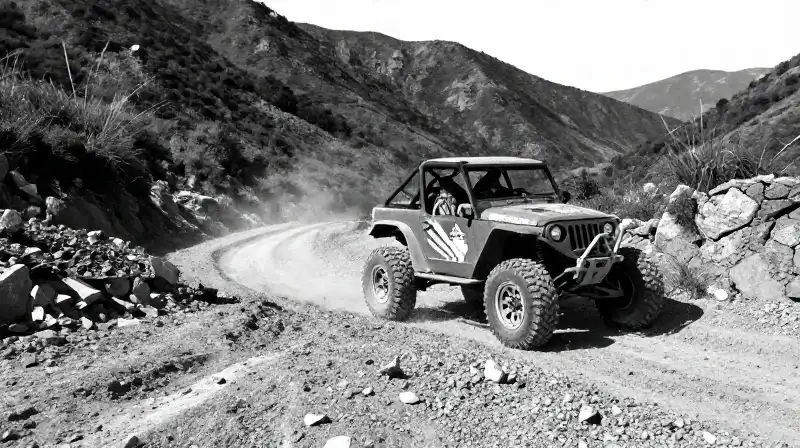
If your driving includes heavy use in rough terrain—mud, deep snow, or steep inclines where maximum torque is required—the robust, mechanically engaged nature of 4WD is superior. Its ability to use locked differentials ensures that if one wheel loses grip, the power is forced to the wheels that still have traction.
Deciding Which is Better: Practical Considerations
The question of “Which is better FWD or 4WD?” lacks a single answer, as performance depends on the terrain.
On-Road vs. Off-Road Performance
For the vast majority of everyday driving, AWD is often the superior choice over both FWD and 4WD because it provides an optimized middle ground. It offers significantly better traction and stability than FWD in slippery conditions without the heavy, low-efficiency penalty of a fully locked 4WD system. However, when pushing a vehicle past standard road conditions into extreme off-road scenarios, the structural rigidity and mechanical grip of 4WD are unmatched.
Performance in Snow and Ice
Both FWD and 4WD offer significant advantages over standard two-wheel-drive vehicles in snow. * **FWD:** Excels in maximizing the limited traction available at the front axle, providing reliable forward momentum. * **4WD:** Provides redundant traction, distributing power across all four wheels to ensure forward drive regardless of how many individual wheels are slipping. * *Note on Limits:* Neither system, no matter how advanced, can overcome poor environmental conditions without appropriate tire selection.
Selection Criteria and Practical Warnings
Choosing a drivetrain is a trade-off between efficiency, cost, and capability. Consider these criteria when making your decision.
- Driving Profile: Is your use 95% city driving (FWD/AWD) or 50%+ severe off-road travel (4WD)?
- Fuel Economy: If maximizing MPG is the primary goal, FWD is the most efficient.
- Handling: AWD provides the most balanced on-road handling and stability, whereas FWD provides predictable turning characteristics.
- Cost and Maintenance: FWD systems are generally less expensive to manufacture and maintain due to fewer complex moving parts compared to the transfer cases and locking differentials found in 4WD.
Ultimately, while the drivetrain defines *how* power is delivered, the performance of the vehicle in any given environment is most critically determined by the quality and type of tires fitted to the wheels. An advanced 4WD system cannot compensate for poor or mismatched tires.
Frequently Asked Questions
Which is better FWD or 4WD?
The question of which is better between FWD and 4WD lacks a single answer, as the optimal choice depends on the required driving environment. FWD is best for daily commuting and efficiency, while 4WD is superior for extreme off-roading and scenarios demanding maximum torque.
Can FWD beat AWD?
The article does not state whether FWD can beat AWD, as performance depends entirely on the specific driving environment. While AWD offers significantly better traction and stability than FWD in slippery on-road conditions, the article notes that the choice between systems lacks a single answer.
How to Choose a Drivetrain (FWD vs 4WD)
Identify Driving Profile
Determine the primary use of the vehicle, considering whether it will be used for 95% city commuting or 50% or more severe off-road travel.
Evaluate Fuel Economy Needs
If maximizing MPG is the primary goal, prioritize Front-Wheel Drive (FWD) due to its light and streamlined mechanical setup.
Determine Handling Preferences
Consider whether you prefer the balanced, stable on-road handling of All-Wheel Drive (AWD) or the predictable turning characteristics of FWD.
Assess Cost and Maintenance
Factor in that FWD systems are generally less expensive to manufacture and maintain compared to 4WD systems with complex transfer cases and locking differentials.
Related Articles