

Jet Fuel Burning Temperature: Ranges, Ignition, and Structural Effects

Introduction
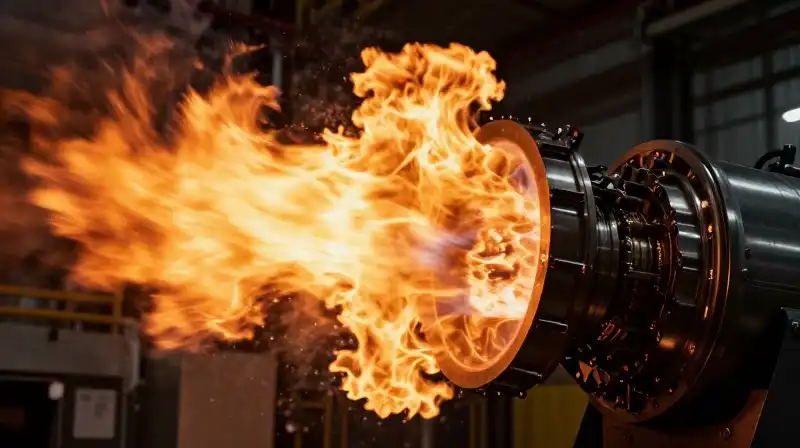
Understanding jet fuel’s burning temperature requires distinguishing between the intense heat produced during combustion and the physical limits of the materials it interacts with. Standard jet fuel, such as Jet A and Jet A-1, typically operates within a flame temperature range of 800°F to 1500°F (approximately 427°C to 815°C). While this heat is significant and causes substantial wear, it generally falls below the melting point of structural steel, which is approximately 2750°F (1512°C). Consequently, while jet fuel burns intensely, it does not usually possess the sustained heat required to cause steel to fully melt.
However, the actual danger of jet fuel exposure to steel lies in structural compromise, not just melting. Heat causes steel to lose its tensile strength and structural integrity at temperatures far below its melting point. This process, often accelerated by “de-annealing,” makes the metal brittle and significantly weakens support structures without them ever turning liquid.
The Physics of Jet Fuel Combustion and Ignition
Combustion is a complex hydrocarbon reaction with oxygen, and the temperature of the fire is not a fixed constant; it depends on the fuel’s chemical makeup, the ambient conditions, and the efficiency of the burn.
Key temperature metrics define how jet fuel behaves:
- Autoignition Temperature: For common grades like Jet A and Jet A-1, the autoignition temperature is around 210°C (410°F). This is the minimum temperature at which the fuel will spontaneously combust without an external spark.
- Flash Point: The flash point for standard aviation fuels is generally above 38°C (100°F). This is the lowest temperature at which the fuel vapors can ignite when an external ignition source is applied.
- Optimal Ignition Range: Efficient combustion typically occurs within a temperature range of 300°C to 400°C. Falling outside this range compromises the fuel’s efficiency or prevents ignition entirely.
Jet Fuel Burning Temp vs. Structural Integrity
One of the most critical misconceptions is equating “hot” with “melt-capable.” While jet fuel’s flame temperature is high, its ability to damage structural steel is a function of prolonged heat exposure, not just peak temperature. The thermal properties of steel dictate its response to the heat transfer from the burning fuel.
As steel is exposed to high heat, it undergoes a process where its internal crystalline structure changes. This reduces the material’s ductility and drastically lowers its critical stress point, meaning it can fail under loads it could easily bear when cold. This compromise often happens long before the steel reaches its melting threshold.
The speed and duration of exposure are vital. Rapid, intense exposure can lead to immediate weakening and brittle failure. This is why experts stress that compromised steel supports, when combined with operational stress and added weight, can lead to catastrophic structural failure.
Understanding Environmental Factors in Aviation Fuel Performance
The combustion of jet fuel is highly sensitive to its environment, a factor that also influences its safety and performance when used at altitude.
Jet fuel is defined by international performance standards and is often a blend of various hydrocarbons ranging from 8 to 16 on the carbon number scale. Different grades are optimized for specific needs:
- Jet B: A wide-cut fuel used in cold climates, designed to handle extremely low temperatures, such as its freezing point of -60°C (-76°F).
- High-Flash Point Fuels (e.g., JP-5): These variants have higher ignition thresholds (minimum 60°C or 140°F) and are utilized in specific, demanding applications like naval aircraft carriers.
- General Operation: Optimal engine performance requires pressurization, usually between 3 and 5 atmospheres at ground level. Temperature control and fuel pre-heating systems are mandatory to ensure efficient combustion and minimize harmful emissions (like CO or UHC).
Can a Spark Ignite Jet Fuel? Answering Ignition Queries
Yes, a spark can ignite jet fuel, provided the temperature and mixture are correct. Ignition requires reaching a certain temperature threshold and having the fuel vaporized and mixed with oxygen.
While jet fuel has a flash point above 100°F, providing a window for ignition, the autoignition temperature (410°F) is significantly higher. This means that in a standard jet engine environment, an external spark is typically used to initiate and sustain the desired combustion reaction, ensuring control and efficiency.
Jet Fuel Burning Temperature vs. Gasoline and Comparison of Fuel Types
Comparing jet fuel to fuels like gasoline reveals differences in safety, performance, and required operating conditions. Gasoline burns at generally lower temperatures than the sustained heat of jet fuel combustion in an engine.
| Metric | Standard Jet Fuel (Jet A-1) | Standard Gasoline | Context/Note |
|---|---|---|---|
| Typical Flame Temp | 800°F - 1500°F | Varies, typically lower | Jet fuel combustion is more regulated. |
| Flash Point | Above 100°F (38°C) | Much lower (e.g., 100°F - 115°F) | Gasoline is inherently more volatile. |
| Primary Use | Turbine-powered aircraft | Passenger vehicles | Jet fuel offers universal logistics. |
| Risk Profile | High sustained heat risk to structure | High volatility/flammability risk | Safety protocols differ significantly. |
Practical Takeaways: Limits and Warnings
For anyone assessing the impact of aviation fuel, it is crucial to move beyond the surface number of “what temperature does jet fuel burn at.” Focus on these practical considerations:
- The Structural Priority: When evaluating fire damage, the risk is not always melting; it is loss of structural integrity due to thermal weakening (de-annealing). This means structures can fail at 400°F or 500°F if exposed for long periods, even if the fuel doesn’t reach the 2750°F melting point.
- Variability is Key: There is no single “jet fuel burning temperature.” It is dependent on the specific fuel grade (Jet A vs. Jet B), the ambient pressure, and the efficiency of the engine’s combustion process.
- Advanced Analysis: Use of thermal modeling is necessary to predict structural failure, as it accounts for heat transfer rates, material specific heat, and the duration of exposure, not just the instantaneous flame temperature.
Frequently Asked Questions
What temperature does jet engine fuel burn at?
Standard jet fuel, such as Jet A and Jet A-1, typically operates within a flame temperature range of 800°F to 1500°F (approximately 427°C to 815°C). This combustion temperature is more regulated than gasoline.
Can a spark ignite jet fuel?
Yes, a spark can ignite jet fuel, provided the temperature and mixture are correct. The fuels flash point is above 100°F, which is the lowest temperature at which the fuel vapors can ignite when an external ignition source is applied.
Related Articles