

Where Does Waste Go? Understanding Sewage, Landfills, and Recycling

Introduction
Where household and industrial waste ultimately goes is not a single destination; rather, it follows a complex and highly regulated path based on the type of waste generated, the local infrastructure, and available economic resources. Depending on whether the waste is liquid (sewage) or solid (garbage, recyclables), its journey can range from being broken down in sophisticated chemical treatment plants to being repurposed as fertilizer, or serving as fuel in waste-to-energy facilities. The core principle of modern waste management is the diversion of materials from the final disposal point (the landfill) through a hierarchy of strategies, beginning with reduction and ending with advanced recycling. Understanding this process requires differentiating between the management of human waste and the disposal of discarded goods.
Liquid Waste: From Home to the Environment
Human waste, primarily categorized as liquid or greywater, requires specialized handling. In most urban areas, this waste enters the municipal sewage system. This system transports the waste to a wastewater treatment facility where it undergoes physical, chemical, and biological processes.
Municipal Sewage Treatment
Municipal systems are designed to process high volumes of waste before returning clean effluent to the environment. This process typically involves:
- Primary Treatment: Removing large solids (physical separation).
- Secondary Treatment: Utilizing biological processes (microorganisms) to break down organic matter.
- Advanced Sanitation: Employing filters, sterilizers, and chemical sanitizers to ensure that the final water discharged into rivers or lakes meets environmental safety standards.
On-Site Septic Systems
For properties without municipal sewer connections, septic tanks serve as a self-contained processing unit. Waste is deposited into the tank, where it undergoes initial decomposition. A subsequent leach field filters and slowly breaks down the waste naturally on the property before it returns to the soil. This method requires careful management of the surrounding soil and water to prevent groundwater contamination.
Solid Waste: The Sorting and Diversion Process
Once solid waste—garbage, paper, plastic, and organic scraps—is collected from homes, the initial step is systematic sorting. The goal is to route materials to the most appropriate processing pathway to maximize resource recovery and minimize landfill volume.
Recycling and Material Recovery
Recyclable materials (plastic, metal, paper, glass) are transported to specialized plants. These facilities utilize materials recovery processes to transform discarded items back into raw materials. For instance, metals can be melted, and plastics can be re-formed, effectively creating a loop that conserves natural resources and reduces the need for new extraction. However, the effectiveness of recycling is often compromised by high contamination rates, where non-recyclables are mistakenly included in recyclable streams.
Composting and Organic Waste
Organic matter, such as food scraps and yard clippings, is directed to composting facilities. Through controlled biological breakdown, this waste is converted into nutrient-rich soil or fertilizer. This process reduces the volume of refuse and mitigates land pollution by creating a valuable resource for agricultural fields.
Waste-to-Energy (WTE) Conversion
When waste cannot be recycled or composted, it is evaluated for energy recovery. WTE facilities burn municipal solid waste in controlled combustion processes to generate steam or electricity. Alternatively, anaerobic digestion uses microorganisms to convert organic waste into biogas (fuel). WTE significantly reduces the volume of waste that needs to be landfilled, but it requires expensive pollution control measures to mitigate the potential atmospheric release of toxins.
The Final Destination: Landfills and Their Risks
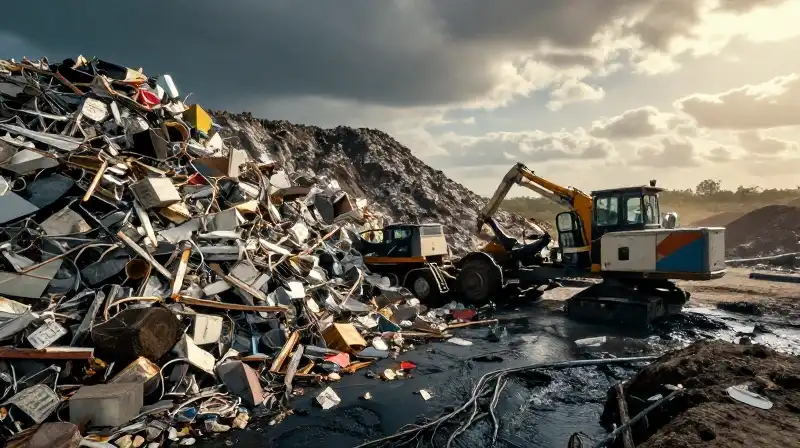
The remaining waste—non-recyclables, residues from WTE, and construction debris—is typically directed to landfills. These facilities are highly regulated sites designed to safely contain waste within specialized cells. Modern landfills use multiple layers of protective barriers, such as thick plastic liners and layers of impermeable clay, to prevent environmental contamination of the surrounding soil and water. While they serve as the necessary final destination for waste that cannot be diverted, they face mounting global pressures:
- Methane Production: Decomposing organic material in landfills generates methane, a potent greenhouse gas, making them a major contributor to human-caused climate change.
- Leachate: Contaminated water (leachate) produced as rain filters through the decomposing waste poses a severe risk of leaking and polluting local water sources.
- Capacity Limits: Due to limited space and increasing waste volumes, managing landfill capacity has become a critical sustainability challenge for many municipalities.
Waste Management in Specialized Settings
Different environments require unique solutions for waste disposal:
- Aviation: On airplanes, liquid and solid waste are collected in holding tanks. Once landed, the waste must be handled by specialized ground services, often treated using chemical processes similar to those in sewage treatment plants before being moved to landfill or further processing.
- Maritime Travel (Cruise Ships): These vessels utilize specialized, on-board waste management systems. Human waste is often treated through advanced biological or chemical processes to meet strict environmental discharge regulations, though solid waste must be carefully managed and disposed of at port.
Environmental Impacts and Future Directions
Waste management is not a neutral process; it involves significant environmental trade-offs. While recycling conserves natural resources, contamination rates can undermine the entire process, adding to municipal costs. WTE facilities offer a way to reduce landfill volume but require sophisticated emission control to protect air quality. The current industry shift is moving heavily toward **source reduction**—aiming to prevent waste before it is created—supported by legislative actions such as bans on single-use plastics and targeted food-waste legislation. Effective waste management depends on public cooperation, robust municipal infrastructure, and a continuous move toward balancing economic feasibility with environmental safety. The critical takeaway is that “where does the waste go” is an answer that changes based on local governance, technological investment, and the specific characteristics of the waste item. Sustainable waste management requires a continuous effort to divert waste away from final disposal through sophisticated processing and responsible reduction at the source.
Municipal Sewage Treatment Process
Primary Treatment
Removing large solids through physical separation to begin the treatment process.
Secondary Treatment
Utilizing biological processes and microorganisms to break down organic matter in the waste.
Advanced Sanitation
Employing filters, sterilizers, and chemical sanitizers to ensure the final discharged water meets environmental safety standards.
Related Articles