
How Non-Slip Shoes Grip: Sole Construction and Safety Standards

Introduction
Understanding how non-slip shoes grip requires looking beyond the aesthetics of rubber. The true effectiveness of slip-resistant footwear is rooted in mechanical design, specifically maximizing the friction between the sole and the ground. Non-slip designation signifies that the shoe is engineered to prevent a slip, primarily by ensuring the sole maintains direct contact with the intended surface, even when that surface is wet, oily, or contaminated. This is not just about having thick soles; it is a combination of advanced outsole technology, specialized materials, and rigorous third-party testing.
For work environments, restaurants, and other high-risk areas, a slip-resistant rating is a critical safety feature. However, it is important to understand that “non-slip” is a regulated claim, not a guarantee of perfect safety. The following sections detail the science behind the grip, the standards that validate the claim, and what users need to know for optimal performance.
The Physics of Grip: How Traction Works
The primary function of any non-slip shoe is to increase friction. Friction is the force that resists motion when two surfaces are in contact. In a non-slip shoe, this friction is maximized through two main strategies: increasing the contact surface area and managing contaminants.
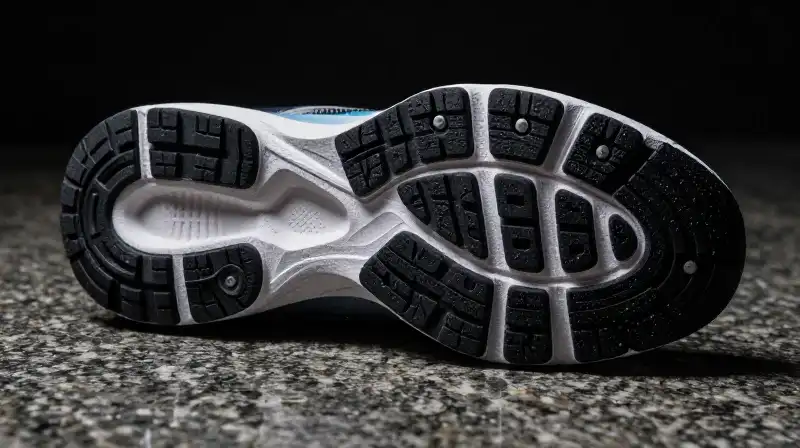
Sole construction typically utilizes highly specialized, often softer, rubber compounds. These compounds are designed to grip slippery materials without excessive deformation, unlike standard rubber. To increase the available surface area, the outsole features intricate, deep, and complex tread patterns (or lugs). A higher concentration of pronounced treads means more of the rubber is actively engaged with the ground at any given moment, resisting sliding.
Preventing Hydroplanining
A significant functional component of non-slip design is the prevention of hydroplanining. This is the mechanism where a thin film of liquid (like water, oil, or food residue) forms between the sole and the ground, causing the shoe to slide across the film instead of gripping the surface. Non-slip shoes counter this using specific grooves and siping. Siping involves cutting thin, sharp slits into the rubber compound. These grooves:
- Channel liquids away from the contact patch, allowing the rubber to interact directly with the solid surface.
- Provide critical micro-edges that bite into surface contaminants.
This functionality is analogous to the grooves found in winter tires, designed to evacuate slush and maintain traction.
Anatomy of a High-Grip Outsole
When determining what makes non-slip shoes work, the design of the sole is the most important factor. A high-performance non-slip outsole possesses specific characteristics:
- Compound Softness and Durability: Manufacturers balance the need for a soft compound (necessary for grip) with high abrasion resistance to ensure the shoe lasts through extended use.
- Pronounced Tread Depth: The lugs must be deep enough to effectively shed debris and channel fluids, unlike shallow, decorative treads.
- Strategic Pattern Design: The pattern isn’t just random; it is engineered to work synergistically with the intended use, offering stability in various walking conditions. For heavy duty applications, some designs (like specialized combat boots) are noted for providing high contact surfaces while resisting clogging.
- Support Components: Beyond the sole itself, many safety shoes incorporate internal features (such as specialized cushioning) to ensure that the added weight and stability provided by the thick sole do not compromise wearer comfort or foot health.
Safety Standards: The Proof of Performance
To pass the description “slip-resistant,” a shoe must meet specific regulatory benchmarks. This is how consumers and employers verify the safety claim, addressing the confusion over whether “slip resistant” is the same as “non-slip.”
US and Canadian Testing Requirements
In the United States and Canada, slip resistance is determined by adhering to established methodologies, primarily the SATRA test (Slip Resistance Test for Accelerated Wear). This rigorous evaluation examines both the heel strike and toe-off phases of a stride across specific, demanding surfaces.
The required testing involves:
- Dry quarry tile.
- Wet quarry tile.
- Quarry tile treated with substances like oil or grease.
To achieve certification under standards like ASTM F-2913, the shoe must demonstrate a minimum coefficient of friction. A common benchmark for passing this certification is a coefficient of friction of 0.40. Advanced manufacturers often go beyond these standard requirements by testing against extreme contaminants, such as high-viscosity grease.
Maintenance: Critical Factors for Sustained Grip
The functional lifespan of any non-slip shoe is tied directly to how it is maintained. Even the most technologically advanced outsole will fail if critical maintenance steps are ignored.
The primary enemy of slip resistance is debris. Accumulation of trapped grease, food residue, or fine dust can quickly fill the intricate tread patterns, effectively sealing the sole and negating the anti-hydroplanining features. This renders the shoe functionally slip-prone.
To ensure continued performance, users must:
- Regularly Clean Lugs: Keep the tread area clear of trapped liquids and solid particles.
- Inspect for Wear: Routinely check the sole for significant wear or loss of tread definition. As the compound wears thin, its ability to grip decreases.
It is important to know that applying common household substances like hairspray will not create a functional non-slip surface; they may only create temporary, unpredictable adhesive risks.
Addressing Specific Applications and Limits
Non-slip footwear is essential protective gear for hazardous work environments, but no shoe is entirely impervious to danger. Context matters greatly when using these specialized shoes.
In specialized industries, such as food service, certain footwear is specifically designed for high-friction environments (e.g., high-tread rubber outsoles suitable for restaurant work). For specific needs, such as for women, the design must balance the protective functionality of the sole with comfort and tailored fits, which may require specific models from brands (such as some categories of Vans designed for workplace use) that meet safety standards.
However, it is a critical limitation to recognize that environmental factors significantly affect safety. Even a certified shoe can be compromised by:
- Large debris (rocks, glass).
- Extremely thick layers of oil or contaminants that overwhelm the fluid-channeling capacity of the sole.
- Sudden changes in environmental conditions not accounted for in the original testing.
No manufacturer can provide an absolute guarantee against all slips, making vigilance and proper maintenance a necessary component of workplace safety.
Synthesis: Making an Informed Choice
When evaluating non-slip footwear, shift your focus from the marketing claims to the mechanical and regulatory evidence. To make the best choice, look for:
- Specific Certifications: Check the product tag for adherence to regional testing standards (e.g., SATRA or ASTM F-2913).
- Design Specificity: Look for evidence of deep, intricate tread patterns rather than simply a generic “grippy” description.
- Material Quality: Preferred materials are typically specialized synthetic rubbers or high-quality polyurethane blends designed to maximize friction while maintaining durability.
Remember, a high coefficient of friction is engineered into the sole, not into the sole’s color. Regular inspection and diligent cleaning of the tread are the final steps in ensuring the shoe functions exactly as designed.
How to Maintain Non-Slip Shoes
Regular Cleaning
Keep the tread area clear of trapped liquids and solid particles to prevent debris from negating the sole's grip.
Check for Wear
Routinely inspect the sole for significant wear or loss of tread definition, as thinning compound decreases the shoe's grip.
Related Articles