
The Science of Slip-Resistant Shoes: Understanding Traction Technology

Introduction
Slip-resistant shoes function through the controlled optimization of friction between the sole and the underlying surface. The core principle is not simply to prevent contact, but to maximize the interaction of the shoe’s outsole with the ground. Understanding what makes non-slip shoes effective requires looking beyond aesthetics at the advanced material science and rigorous testing standards that define true traction technology.
The Physics of Slip Resistance: Maximizing Friction
The function of a slip-resistant sole is fundamentally rooted in physics: increasing the coefficient of friction. When a shoe interacts with a slippery surface, the goal is to ensure the rubber maintains a direct, solid connection with the ground, preventing the formation of a fluid layer between the sole and the surface. This process is known as hydroplanining. By utilizing specialized, soft, and finely treaded rubber, the sole achieves two main objectives:
- Increased Contact Area: A complex, deep tread pattern significantly increases the effective surface area where the rubber meets the ground.
- Fluid Channeling: Specific grooves and patterns are engineered to channel liquids—such as water, grease, or food residue—away from the point of contact. This allows the underlying rubber to interact directly with the solid surface, maintaining grip even when contamination is present.
This mechanism is similar to the siping found on winter tires, where tiny slits are cut into the tread to disperse slush and improve traction.
Engineered Components: How Tread and Materials Create Grip
The design of a slip-resistant shoe is an integration of several advanced engineering components. These features are what define the functional quality of the footwear.
Advanced Outsole Technology
The outsole is the primary determinant of a shoe’s slip-resistance. Manufacturers employ high-grade materials to balance grip, durability, and comfort.
- Soft Rubber Compounds: Softer compounds are often preferred because they tend to conform better to uneven surfaces and maintain a better frictional bond than very hard, rigid rubbers.
- Polyurethane (PU): This material is often utilized for its high durability and excellent quality, providing reliable slip resistance while resisting abrasion.
Tread Pattern and Structural Design
The physical shape of the sole is designed to manage forces during the gait cycle.
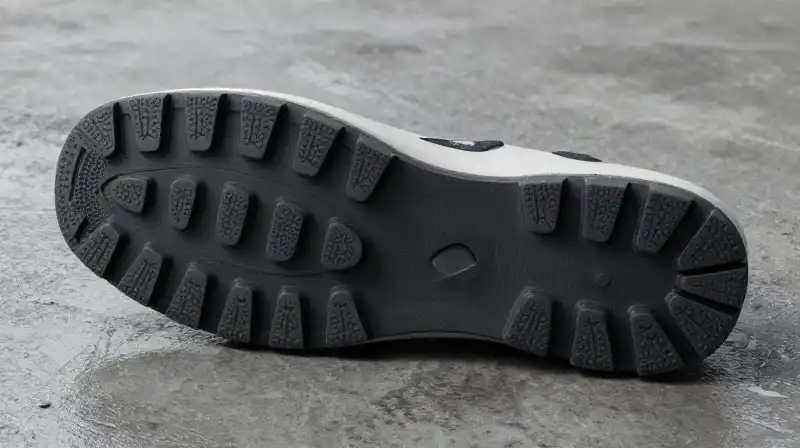
The tread must be deep and complex. This complexity allows the sole to resist the clogging of its features. For instance, certain work boots are designed with pronounced lugs that maintain a high contact surface area while resisting the accumulation of heavy dirt or sludge.
Furthermore, siping and intricate grooves are applied to enhance traction in demanding environments, particularly those involving moisture or ice, ensuring the shoe remains functional under diverse conditions.
Verification of Quality: ASTM and SATRA Testing
Simply having a deep tread does not guarantee slip resistance; genuine certification is required to ensure the claims are accurate. Manufacturers must pass specific, rigorous industry tests.
The Role of ASTM F-2913 and CoF
In the United States and Canada, standardized testing methods provide the definitive measurement of safety.
ASTM F-2913 outlines the procedure for evaluating slip resistance. To achieve certification, a shoe must demonstrate a minimum coefficient of friction (CoF) of 0.40. This testing is conducted on various critical surfaces, including:
- Dry quarry tile
- Wet quarry tile
- Quarry tile treated with oil or grease
Meeting this minimum CoF rating confirms that the shoe meets the regional standard for slip-resistant use.
SATRA and Operational Testing
The SATRA (Slip Resistant Tread Analysis) methodology evaluates both the heel strike and toe-off portions of a stride, providing a comprehensive look at how the shoe performs during dynamic movement, not just static standing. Advanced manufacturers often go beyond standard requirements by testing their products against extreme contaminants like heavy grease to ensure resilience in high-risk professional environments.
Limitations and Maintenance: When Slip Resistance Fails
It is a crucial misunderstanding that no shoe is entirely slip-resistant. The functional lifespan and effectiveness are highly dependent on external factors and regular care.
Even the most advanced sole design can be compromised by operational limits:
- Contaminant Accumulation: The grooves and treads are designed to channel liquids, but they will fail if they become packed solid with debris (e.g., small rocks, glass, excessive food waste).
- Wear and Degradation: Like any footwear, the tread lugs and definition will wear down over usage and mileage. Loss of this definition diminishes the crucial surface area and reduces frictional capability.
- Environmental Factors: Spills of oil, large puddles, or highly viscous substances can exceed the design limits of the outsole technology, significantly increasing the slip risk.
Maintaining the integrity of the shoe involves routine cleaning. Regularly removing trapped grease and debris is necessary to ensure the sophisticated traction features remain fully operational and reliable.
Practical Criteria for Selection and Safety
When deciding whether a specific shoe meets the criteria for your needs, look beyond marketing claims and focus on verifiable data and function.
Evaluating Functional Footwear
To select the appropriate slip-resistant shoe for work or restaurant environments, consider the following criteria:
| Feature | Why it Matters | Check For |
|---|---|---|
| Certification | Valid, regional adherence to ASTM or SATRA standards. | Product tags or manufacturer descriptions mentioning specific ratings (e.g., CoF 0.40). |
| Sole Material | Balance of durability and conformability. | High-quality rubber or polyurethane compounds. |
| Tread Depth & Design | Ability to disperse liquids and maximize contact. | Complex, deep, and aggressive tread patterns. |
Safety and Non-Slip Confusion
It is essential to differentiate between standard comfort features and safety certifications. Footwear designed for hazards often combines slip resistance with other protective features, such as Safety Toe ratings or Spill Guards. Do not rely on household chemicals or temporary fixes to enhance grip; they do not replace engineered slip-resistant technology and may introduce new safety risks.
Synthesis: Critical Steps for Safe Usage
True safety comes from understanding the limits of the engineering. While slip-resistant shoes are essential protective gear designed to mitigate risk in demanding work environments, they are not infallible. Before relying on any pair of shoes in a critical environment, perform a controlled inspection of the tread for adequate definition. If the sole shows significant wear, replacement is the safest course of action. Always remember that the ultimate effectiveness of your slip-resistant gear depends on a combination of the shoe’s advanced engineering and the diligence of the user in maintaining its intended function by keeping the soles clean and debris-free.
How to ensure the safe and effective use of slip-resistant footwear
Inspect the tread
Before relying on any pair of shoes in a critical environment, perform a controlled inspection of the tread for adequate definition.
Assess wear
If the sole shows significant wear or degradation, replace the shoe, as loss of tread definition reduces frictional capability.
Maintain cleanliness
Regularly remove trapped grease and debris from the grooves and treads to ensure sophisticated traction features remain fully operational.
Ensure clear contact
Rely on the user's diligence to keep the soles clean and debris-free to maintain the intended function of the engineering.
Related Articles