
Is Diatomaceous Earth Pet Safe? A Guide to Safe Pest Control

Introduction
The question of whether diatomaceous earth (DE) is pet safe is highly dependent on the specific grade of the product used and the precautions taken during application. Generally, food-grade diatomaceous earth is considered safe for use in pet-adjacent environments because its primary mechanism of action targets biological features unique to insects. However, “safe” does not mean “risk-free.” The main risk associated with DE is not direct toxicity to your pet, but rather the danger posed by inhaling the fine, abrasive powder.
If you choose to use DE for pest control in your home, understanding the critical distinction between food-grade and filter-grade DE, along with implementing strict application protocols, is essential to ensuring the safety of your dogs, cats, and other household animals.
Diatomaceous Earth: Food Grade vs. Filter Grade Safety
The most crucial decision when considering diatoms is selecting the correct grade. Not all diatomaceous earth is created equal, and choosing the wrong type can introduce significant hazards.
- Food-Grade DE (Recommended): This type is typically mined from dry lake beds, undergoes specific processing, and is generally considered safe for ingestion in small, controlled quantities. It is the standard recommendation for home pest control near pets.
- Filter-Grade DE (Avoid): This grade is sourced from saltwater and is calcined (burned) to create an even more rigid crystalline structure. It contains high levels of crystalline silica which, when inhaled, poses a serious risk of respiratory damage. Filter-grade DE should never be used indoors where pets or humans are present.
Because the food-grade material is a finely ground, naturally occurring substance, while ingestion should still be avoided, its use is significantly safer than the chemically altered filter-grade varieties.
How DE Works and Its Limited Impact on Pets
Diatomaceous earth is a natural, non-toxic powder composed of fossilized microscopic remains of diatoms. Its function in pest control relies on its physical abrasiveness, not chemical poison. It works by absorbing natural oils from the exoskeletons of crawling insects and causing microscopic cuts, leading to dehydration and death.
Due to this mechanism, DE only affects creatures possessing an exoskeleton—a trait insects and certain microscopic pests share. Vertebrates like dogs, cats, and humans, which have internal skeletons and are not susceptible to DE’s abrasive action, are not directly poisoned by the substance. The safety concerns, therefore, revolve entirely around the physical handling of the powder and the prevention of inhalation.
The Primary Risk: Inhalation and Respiratory Irritation
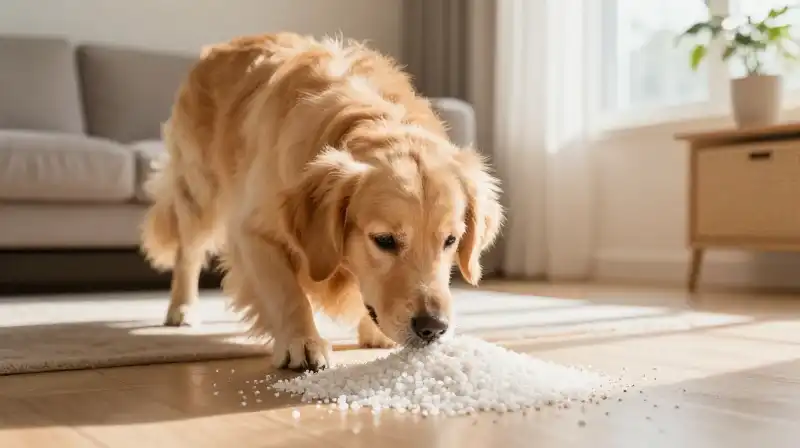
The greatest threat posed by diatomaceous earth is particulate matter. As a fine powder, DE can easily become airborne, leading to dust that can be inhaled by pets and people. This inhalation can cause respiratory irritation, coughing, and discomfort, especially in sensitive individuals.
Even with food-grade DE, the risk of airborne dust means that the primary safeguard is proper application and a clean environment. For pets that may have pre-existing sensitivities or health conditions, such as seniors, kittens, or brachycephalic breeds (like Bulldogs), extra caution must be exercised due to their greater vulnerability to respiratory irritation.
Best Practices for Applying DE Around Pets
To maximize pest control effectiveness while minimizing risk, adhere strictly to these application guidelines:
- Target Specific Areas: Apply DE lightly and strategically to cracks, crevices, and low-traffic areas where pests are known to travel. Avoid wide, open floors, high-traffic zones, or pet sleeping/feeding areas.
- Wear Personal Protective Equipment (PPE): When applying DE, use a dust mask and ensure there is ample ventilation. This prevents the powder from becoming immediately airborne.
- Complete Settling Time: Once applied, pets must be kept out of the treated area until the fine powder has completely settled. Do not attempt to clean it up immediately.
- Controlled Ingestion Risk: While unlikely, it is advised never to apply DE directly onto pets, in their food or water bowls, or on their bedding to minimize the risk of ingestion.
Cleaning Up Diatomaceous Earth Safely
Managing DE cleanup requires care to prevent the powder from becoming airborne. Standard household vacuum cleaners should be avoided entirely when cleaning up DE. The suction can clog the filters and potentially cause motor strain, and more importantly, it re-suspends the fine dust, increasing inhalation risks.
The preferred method for removing spilled DE from hard surfaces is methodical mopping or damp sweeping. This allows the fine particles to be captured and removed without turning them into airborne dust. Small spills should be swept slowly and carefully, always wearing a mask and securing ventilation.
Making the Safety Decision: A Practical Summary
Choosing to use diatomaceous earth around your pets depends on acknowledging and mitigating its physical risks.
| Factor | Safety Protocol & Recommendation |
|---|---|
| Type of DE | Use Food-Grade DE only. Strictly avoid filter-grade or pool-grade DE due to the risk of crystalline silica inhalation. |
| Application | Apply lightly and strategically to cracks/crevices. Avoid applying thick layers or large amounts in open areas. |
| Pet Interaction | Keep pets out of the application zone until the powder has fully settled. Avoid placing DE near food or water sources. |
| Cleanup | Use damp mopping; avoid using standard household vacuum cleaners, as this creates airborne dust. |
By prioritizing food-grade material and adhering to strict protocols regarding ventilation, application, and cleanup, the use of diatomaceous earth becomes a safe and effective method for pest control in homes with dogs, cats, and other household animals.
How to Apply Diatomaceous Earth Safely Around Pets
Target Specific Areas
Apply DE lightly and strategically to cracks, crevices, and low-traffic areas where pests are known to travel. Avoid wide, open floors, high-traffic zones, or pet sleeping/feeding areas.
Use Personal Protective Equipment (PPE)
When applying DE, use a dust mask and ensure there is ample ventilation. This prevents the powder from becoming immediately airborne.
Allow Complete Settling Time
Once applied, pets must be kept out of the treated area until the fine powder has completely settled. Do not attempt to clean it up immediately.
Control Ingestion Risk
Never apply DE directly onto pets, in their food or water bowls, or on their bedding to minimize the risk of ingestion.
Related Articles