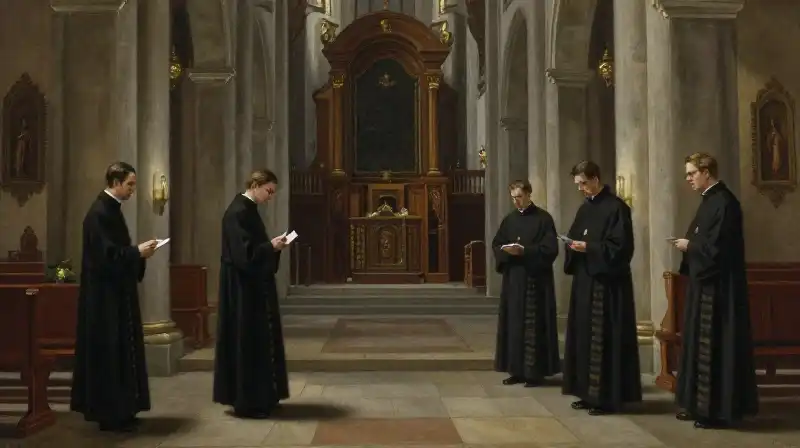

Priest vs. Father vs. Pastor: Defining Clerical Titles


Introduction
The terms “priest,” “pastor,” “father,” and “reverend” are often used interchangeably, leading to frequent confusion regarding roles, titles, and proper forms of address. Understanding the difference is crucial because these terms often denote completely separate concepts: some refer to a specific *religious role* or ordination, while others refer simply to a *form of address* or honor. This article clarifies how these titles function within various Christian traditions, particularly within the Catholic Church, helping you correctly distinguish between a clerical office and the appropriate way to speak about that office.
Defining Role vs. Title: A Necessary Distinction
The primary confusion arises because a title of respect can be applied to a specific ordained position. It is important to separate the functional roles from the manner of addressing them.
Roles (What the person does):
A pastor or priest describes the specific vocational position or the sacramental authority granted through Holy Orders. These terms define the job, the responsibilities, and the theological function of the individual within their denomination. The role is tied to the person’s ordination.
Titles of Address (How you speak to the person):
A father or reverend is a courtesy or form of address used to acknowledge a person’s religious status or high standing. These titles are linguistic conventions—like calling someone “Doctor” or “Ms.”—and can be applied to individuals regardless of their specific rank, although they are most commonly associated with clergy.
Priest vs. Pastor: Understanding Denominational Roles
While the general functions of these roles—guiding a congregation, administering sacraments, and offering spiritual counsel—overlap, the distinctions between “priest” and “pastor” are heavily influenced by denomination.
Catholic and Orthodox Context
In Catholic, Orthodox, and Anglican traditions, the term Priest holds specific sacramental weight. A priest is an ordained minister who acts in persona Christi (in the person of Christ), serving as a primary celebrant for rites like the Eucharist, confession, and the Anointing of the Sick. The role of a Pastor in this context is often the administration of a specific parish (a parish pastor is typically a priest, though the title “pastor” is used descriptively).
- Priest: Refers to the sacramental ordination and function (essential for performing the rites of the church).
- Pastor: Refers to the leadership and administrative oversight of a parish or community.
Protestant Context
The Protestant Reformation led many traditions to shift away from the exclusive concept of the “priestly role” as understood in the Catholic Church. In many Protestant churches, ordained leaders are generally referred to as Pastors, Ministers, or Preachers. While these individuals hold high religious authority, the title “priest” is not typically used to describe their ordination or specific function.
Father vs. Reverend: Navigating Forms of Address
The choice between “Father” and “Reverend” is largely dictated by the level of formality and the specific denomination.
When to Use “Father”
In Catholic, Orthodox, and Anglican traditions, “Father” is the standard and most common title used when speaking directly to a priest. It functions as a term of endearment and respect, akin to addressing a family patriarch, and is typically used combined with their first or last name (e.g., Father Jones). It is widely accepted in everyday usage, informal settings, and personal interactions.
When to Use “Reverend”
The title “Reverend” is a general term of respect for ordained individuals and is utilized based on formality. In the Catholic Church, while “Father” is used for a priest in speech, formal written documentation or official correspondence often mandates the use of “Reverend” or the abbreviation “Rev.” To maintain high formality, “Reverend” is also used when addressing higher ecclesiastical titles, such as a Bishop or Monsignor.
- Daily Speech (Catholic): “Father” (most common).
- Formal Writing (Catholic): “Reverend” or “Rev.” (preferred).
- General Use (All Traditions): “Reverend” (applicable to pastors, ministers, and clergy generally).
Comparison Table: Roles and Usage
| Term | Category | Primary Function/Definition | Common Usage Context | Denominational Association | | :--- | :--- | :--- | :--- | :--- | | **Priest** | Role/Office | Sacramental celebrant (acting *in persona Christi*). | Official rites (Eucharist, Confession). | Catholic, Orthodox, Anglican (and historical contexts). | | **Pastor** | Role/Office | Leadership and administration of a congregation/parish. | Daily guidance and community leadership. | Protestant and Catholic (descriptive of the role). | | **Father** | Title of Address | Form of respect/address for a priest. | Informal speech, personal introduction. | Primarily Catholic, Orthodox, Anglican. | | **Reverend** | Title of Address | General title of honor for ordained individuals. | Formal writing, general respect for clergy. | Broad Christian tradition (general use). |
Navigating Nuances and Errors
Clerical terminology is often complex due to historical shifts and regional differences. To avoid common errors, consider these nuanced points:
The Priestly Orders and the Priesthood
In the Catholic Church, there is a distinction between the Ministerial Priesthood (the ordained clergy—bishops and presbyters) and the common priesthood, which refers to the spiritual state shared by all baptized Catholics. Furthermore, while the Latin (Western) Church mandates clerical celibacy for its priests, the Eastern Catholic Churches permit married men to be ordained, reflecting the wide variation in discipline.
The Importance of Context
Always prioritize the formality of the situation over personal preference. If you are sending a formal letter to a clergyman, “Reverend” is the safer choice. If you are meeting a priest at a parish and are introducing him casually, “Father” is appropriate. The abbreviation “Fr.” is a casual term often seen in media but is generally not considered part of the formal protocols of the Catholic Church.
Practical Synthesis: A Guide for Decision-Making
The correct title depends entirely on whether you are describing *who the person is* (their job) or *how you are speaking to them* (the respect you are affording them).
- If you are describing the job: Use Priest (for specific sacramental function) or Pastor (for community leadership and administration).
- If you are addressing a Catholic priest in conversation: Use Father.
- If you are writing a formal document to any clergyman: Use Reverend.
- If you are speaking generally about religious leaders across faiths: Use Reverend or Cleric/Minister.
By keeping the functional role separate from the form of address, you can navigate the complexities of clerical titles with precision and respect.
Frequently Asked Questions
Are Father and priest the same?
No, they are not the same. A priest refers to a specific vocational role or ordained position, while Father is a form of address or title used to respectfully speak to a priest, primarily in Catholic, Orthodox, and Anglican traditions.
How to correctly distinguish between a clerical role and a form of address
Determine if you are describing the job
Use the terms "Priest" (for sacramental function) or "Pastor" (for community leadership) to describe the functional role of the person.
Determine if you are speaking to a Catholic priest in conversation
Use the title "Father" when addressing a Catholic priest informally or in person.
Determine if you are writing formally to any clergyman
Use "Reverend" or "Rev." for formal written documents or official correspondence to maintain formality.
Determine if you are speaking generally about religious leaders
Use "Reverend" or "Cleric/Minister" when referring generally to religious leaders across different faiths.
Related Articles