

How to Make a Ring Bigger: DIY vs. Professional Resizing Methods

Introduction
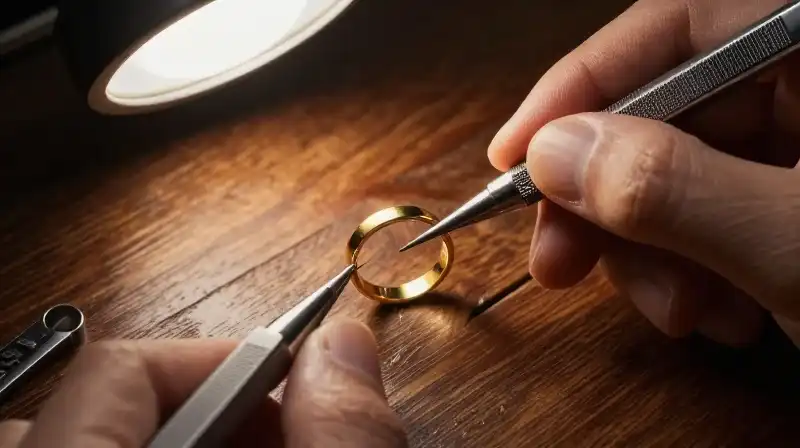
When a ring starts feeling too tight, the desire to make it bigger is immediate. Whether you are dealing with a sudden size increase or simply need a more comfortable fit, there are various ways to make a ring bigger. The main methods fall into two categories: DIY approaches and professional resizing. For small adjustments, home methods can offer quick relief, while significant size increases almost always require a jeweler to preserve the ring’s structural integrity and value.
DIY Techniques for Ring Expansion
Before taking a ring to a jeweler, certain low-risk methods can help increase its circumference. These are typically best for thicker bands made of soft metals, like gold or sterling silver, and for those with minimal or no stones.
Gentle Physical Stretching
For a ring that is not heavily set with stones, you can attempt a manual stretch using simple tools.
- The Hammer and Mandrel: Place the ring on a smooth metal mandrel or a piece of wood. Using a soft mallet, apply firm but gentle, even strokes across the band. This method aims to slightly flatten and expand the metal without deforming the entire structure.
- Small Gap Adjustment: For very thick bands, carefully and slightly cut a small gap along the inner circumference of the metal using precision pliers. This allows the ring to be gently pulled open to increase its size, though this risks weakening the metal.
Temporary Non-Structural Adjustments
If the ring is only slightly too tight, temporary measures can assist with wearing it, but these do not permanently change the ring’s size.
- Plastic or Silicone Inserts: Some jewelers use temporary plastic ring inserts that can be pushed into the shank, providing immediate, non-permanent relief without altering the metal.
- Lubricants: Applying soap, talcum powder, or specialized ring lubricant to your finger can help reduce friction, making it easier to slide a tight ring on or off, but this is not a resizing solution.
Limits and Risks of DIY Ring Resizing
It is important to understand that home methods carry inherent risks, especially with valuable jewelry. DIY methods should generally be limited to minor increases and basic metal bands.
The Danger of Setting and Stones
Stretching or aggressively hammering a ring with stones is strongly cautioned against. The prong setting holding the gemstone is the weakest point on the ring. Applying physical force can cause the metal to deform unevenly, potentially dislodging or shattering the prongs, which compromises the stone’s security and the ring’s value.
Material and Design Constraints
Not all rings are suitable for home adjustments. Certain materials and styles pose significant challenges:
- Hard Metals: Metals like platinum are extremely dense and have high melting points, making them very resistant to simple reshaping. Attempting to aggressively bend or force platinum at home is difficult and often unsuccessful.
- Intricate Designs: Rings with detailed engravings, soldered components, or very delicate shanks may break or lose their aesthetic appeal during aggressive adjustments.
- Tungsten and Ceramic: These hard, brittle materials cannot be stretched or hammered like traditional gold or silver; they must be professionally cut and replaced.
Professional Methods for Significant Size Increases
When the increase required is moderate to significant, professional resizing is the safest and most reliable path. Jewelers utilize specialized tools and techniques to ensure the ring maintains its structural integrity.
The Professional Resizing Process
Depending on the size increase needed and the ring’s design, a jeweler may employ several high-precision techniques:
| Technique | Description | Best For |
|---|---|---|
| Cutting and Pull-Through | The band is cut at a specific point, the opening is gradually pulled apart or stretched, and the severed ends are welded back together and polished. | Moderate to large increases in soft metals (gold, silver). |
| Metal Insertion (Sizing Beads) | Small components like sizing bars or beads are cut into the shank, soldered into place, and then welded closed. | Moderate increases where cutting is not preferred; allows for precise, non-permanent or near-permanent changes. |
| Expanding on Machinery | Professional machinery is used to pull the band outwards, though this may result in the metal becoming slightly thinner along the expansion line. | Thick, solid bands without intricate settings. |
Factors Influencing Resizing Difficulty
The ease or difficulty of “making rings bigger” depends on three primary factors:
- Metal Type: Soft metals, such as 14k or 18k gold, are generally more malleable and easier to resize than hard, dense metals like platinum. High karat gold is often more pliable than low karat.
- Design Complexity: A simple, plain band is far easier to modify than a complex piece with milgrain, heavy settings, or multiple fused elements.
- Required Size Change: Small, minor increases are manageable. Large size leaps require more substantial material addition and meticulous rework.
Final Synthesis: Making the Decision
Can you make your rings larger? Yes, but the answer changes based on the scale of the required change and the nature of the ring itself. If you only need a slight adjustment on a simple, thick band, a careful home stretching attempt might offer a quick, temporary fix. However, if the change is significant, or if your ring features embedded gemstones, intricate detailing, or a hard metal like platinum, professional intervention is essential. When seeking a professional resize, inform the jeweler about the specific adjustment you need and ask about the potential for minor alterations, such as a slight change in band thickness or the addition of invisible soldering, to ensure the final piece remains secure, polished, and retains its structural brilliance.
Frequently Asked Questions
Can I make my rings larger?
Yes, rings can be made larger, but the method depends on whether you need a slight adjustment or a significant increase. While DIY techniques may work for minor increases on simple metal bands, significant changes or rings with stones, intricate designs, or hard metals require professional resizing.
How to Resize a Ring Using Cutting and Pull-Through
Cut the Band
Cut the ring's band at a specific point where the size increase is needed.
Pull Apart and Stretch
Gradually pull apart or stretch the severed opening in the band to increase its circumference.
Weld and Close
Weld the severed ends back together to form the enlarged band.
Final Polish
Polish the completed ring to ensure it retains its aesthetic appeal and structural integrity.
Related Articles