
How to Determine Magnet Polarity: Methods and Key Principles

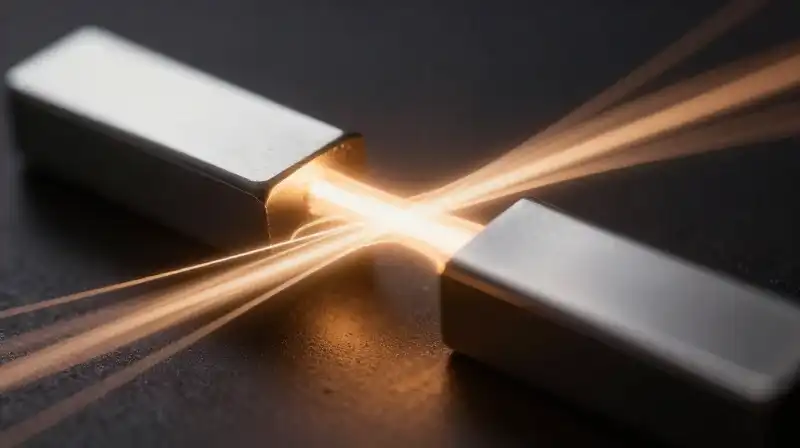
Introduction
Magnet polarity is a critical characteristic defined by the North (N) and South (S) designations at the ends of a magnet. Unlike electrical charges, which are conventionally labeled positive and negative, magnetism is determined solely by the directional orientation of its magnetic field. Determining magnet polarity is essential whether you are working with advanced engineering, navigating by Earth’s field, or simply trying to ensure the correct fit for a magnetic repair.
The fundamental principle guiding magnet polarity is simple yet powerful: Opposite poles attract, and identical poles repel. By understanding this law and employing various practical methods—ranging from using a simple compass to analyzing material behavior—you can reliably identify the North and South poles of any magnetic object.
The Core Principles of Magnetic Interaction
Before attempting to identify a magnet’s poles, it is vital to understand the forces at play. A magnetic field is generated by the movement of charged particles within a material. Polarity refers to the specific orientation of those forces, dictating how the magnet interacts with the world.
The two core principles are:
- Attraction: When the North pole of one magnet is brought near the South pole of another, a magnetic force of attraction is created.
- Repulsion: When the North pole is brought near the North pole, or the South pole near the South pole, a repulsive force pushes them apart.
This foundational knowledge allows for basic identification; if two ends push away from each other, they are like poles. If they pull toward each other, they are opposite poles.
Practical Methods for Confirming Magnet Polarity
The most accessible and widely used methods rely on observation and simple physics, offering reliable ways to determine polarity without complex equipment.
Using a Compass for Orientation
The Earth acts as a massive magnet, possessing its own magnetic field. A compass functions by aligning its own magnetic needle with this Earth field. This is the most common and globally reliable method for orientation.
- Place the magnet on a non-metallic, stable surface, ensuring it is free to move.
- Hold a compass near the magnet (without touching it).
- Observe the interaction:
- If the magnet is strongly attracted to the compass needle, the magnetic poles are opposite.
- If the magnet is strongly repelled by the compass needle, the magnetic poles are identical.
Note that while the compass helps determine the orientation relative to geographic North, it is important to remember that the Earth’s magnetic poles are not the same as the geographic poles. The magnetic North Pole is, for example, a magnetic South pole.
Free Suspension Technique
If you need to determine the polarity of an unmarked permanent magnet in a general direction (like determining which way the North pole faces globally), you can use the free suspension method.
Suspend the magnet freely from a string or thread, allowing it to hang without contact with any surface. When the magnet settles, its North pole will generally point toward the Earth’s geographic North. This provides a quick and low-tech way to establish a baseline polarity direction.
Leveraging Color Coding and Notches
Many commercial manufacturers utilize convention to simplify identification, though these rules are not universal and vary by industry (e.g., marine vs. aerospace).
- Color Conventions: A common, though not absolute, convention dictates Red for North and Blue for South in navigational tools. However, some products may utilize opposite conventions.
- Mechanical Notches: Historically, manufacturers have used small mechanical notches or specific markings molded into the magnet’s casing to denote the pole location.
Addressing Practical Identification Challenges
Not all magnet identification is as straightforward. Different materials and specialized applications require specialized knowledge.
Distinguishing Permanent vs. Electromagnets
The method of identification differs significantly depending on the magnet type:
| Magnet Type | How Polarity is Defined | How to Reverse Polarity |
|---|---|---|
| Permanent Magnet | Fixed, stable orientation due to internal material structure. | Extremely difficult; typically requires heating to the Curie temperature followed by a powerful reversing field. |
| Electromagnet | Transient orientation, defined by electrical current direction. | Simple; simply reverse the direction of the electric current applied to the coil. |
Using Polarity Testers and Digital Detection
For precise or industrial applications, dedicated tools provide instant feedback. Magnetic pole detectors—which may be handheld, electronic, or painted—allow users to simply touch or bring the device near the magnet. These devices instantaneously indicate the poles, removing the need for manual testing or relying on color coding.
Advanced Field Detection and Physics
In scientific research or complex systems, magnetic polarity is determined through sophisticated observation of particle behavior.
- Charged Particle Deflection: In high-tech applications, such as within electron guns, the direction of the magnetic field (and thus the polarity) is revealed by observing the deflection patterns of charged particle beams as they pass through the field.
- The Right-Hand Rule: For understanding the relationship between electric current and the resulting magnetic field direction, the Right-Hand Rule is a fundamental concept used by physicists to map the orientation of magnetic forces.
Key Distinctions: Polarity vs. Charge
A common source of confusion is the assumption that magnetism mirrors electricity. It is crucial to distinguish between the two concepts:
Magnet polarity refers to the specific orientation (North and South) of magnetic forces within a material. While electrical current creates magnetic fields, the poles of a magnet themselves do not carry “positive” or “negative” charges in the conventional sense; they are merely directional anchors for magnetic field lines. Even if a magnet was labeled “+N” or “-S,” this would be a convention, not a description of its fundamental physical property.
Summary of Polarity Identification Criteria
The choice of method depends on the required precision and the tools available:
- Quick Check: Use the attraction/repulsion test with another magnet.
- Global Orientation: Suspend the magnet freely; the North pole points toward geographic North.
- Field Verification: Use a compass or magnetic pole detector to test interaction with a known field.
- Technical/Industrial: Utilize specific color codes, mechanical notches, or advanced field sensors depending on the application’s required accuracy.
For reliable and consistent identification, always rely on the fundamental principle of attraction between opposites and the stable properties of the magnet, keeping the distinction between magnetic North and geographic North in mind.
Frequently Asked Questions
How to confirm magnet polarity?
Polarity can be confirmed by testing if the magnets ends attract (opposite poles) or repel (identical poles). Other methods include using a compass, suspending the magnet freely to let its North pole point toward geographic North, or utilizing magnetic pole detectors for precise feedback.
Using a Compass to Determine Magnet Polarity
Setup Magnet
Place the magnet on a non-metallic, stable surface, ensuring it is free to move.
Introduce Compass
Hold a compass near the magnet (without touching it).
Analyze Interaction
Observe the interaction: if the magnet is strongly attracted to the compass needle, the magnetic poles are opposite; if the magnet is strongly repelled by the compass needle, the magnetic poles are identical.
Related Articles