How the Hot Air Balloon Eye Test Works to Measure Vision Effort

Introduction
The hot air balloon eye test is a specific application of an instrument called an autorefractor. This machine is designed not just to provide a number, but to measure the actual effort your eye expends to focus on a visual image. Its primary function is to generate a precise, objective estimate of your eye’s refractive state. By analyzing how your eye works, the autorefractor assists the optometrist in determining your initial vision prescription. This process begins by projecting light into your eye and detecting the reflections, providing a foundational data point for your overall eye care plan.
How the Autorefractor Measures Vision Effort
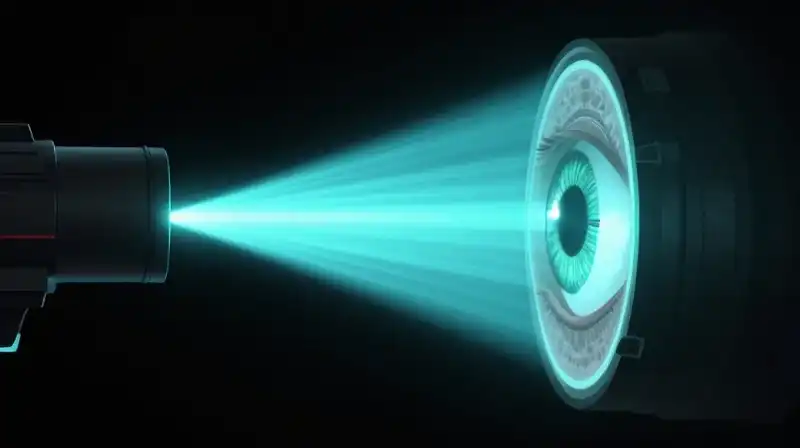
At its core, the autorefractor uses light physics to assess focusing power. The device emits invisible infrared light into the eye. This light travels through the eye’s lens and is reflected off the retina at the back. If the eye is focused correctly, the reflection will appear clear; if the eye is unfocused, the reflection will appear blurry. The machine’s sensor detects whether the reflected image is sharp or blurry, and based on that clarity, it calculates the precise amount of focusing power—or the “effort”—your eye exerted to achieve clarity.
The Role of Distance and the Hot Air Balloon Image
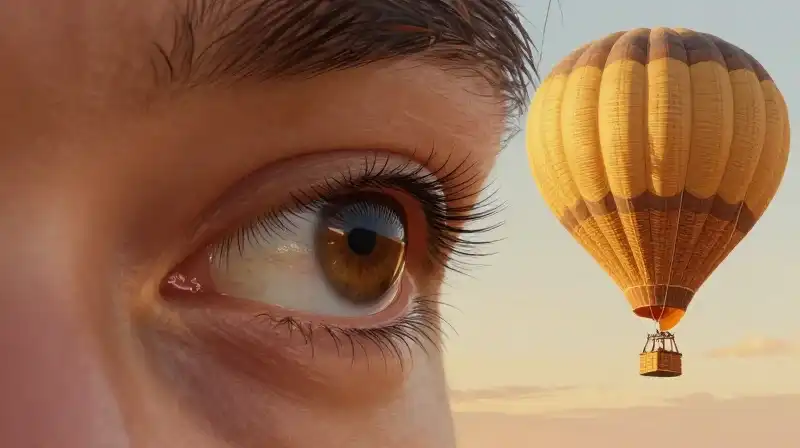
> The choice of images, such as a hot air balloon, is deliberate and scientifically grounded. These objects are selected because the brain naturally perceives them as being at a far distance. Testing the eye’s focus on objects that are perceived as distant allows the autorefractor to evaluate the eye’s “relaxed” state, which corresponds to the eye’s inherent focusing power. Additionally, using complex or recognizable objects helps maintain the patient’s attention, making the test more reliable, particularly for younger individuals who might otherwise become easily distracted.
Understanding the Machine’s Measurements
When the autorefractor completes its measurement, it provides an objective starting prescription based on the detected reflections. This measurement quantifies the eye’s characteristics, specifically identifying the sphere and cylinder measurements—the core components of a lens prescription.
Objective vs. Subjective Results
> It is crucial to understand the limitation of the machine: the result from the autorefractor is a baseline estimate, not the final, complete prescription. The machine is a sophisticated, objective tool that measures *potential* focusing power, but it cannot account for the entire spectrum of human visual comfort or cognitive acceptance of the vision.
Why Professional Refinement Is Essential
The data produced by the autorefractor is the starting point. The final, optimal prescription is always refined by an optometrist using subjective tools. This refinement is a critical, second phase because it focuses on how the patient *feels* while seeing, a factor the machine cannot measure.
The Subjective Correction of the Manifest
> The optometrist utilizes the autorefractor’s “manifest” as a filter. They then perform subjective lens testing, which involves: >
>- Testing multiple lens options to find the level of correction that provides the best clarity and ease of sight. >- Accounting for personal comfort, headaches, and peripheral vision. >- Ensuring the patient’s visual system “accept” and processes the vision correctly for daily life. >
> This subjective process is what maximizes vision quality, as it filters out the subtle discrepancies that the objective machine might overlook.
Practical Considerations for Eye Care
When discussing vision assessments, it is important to distinguish between the purpose of the test and the final outcome:
| Phase | Instrument | What it Measures | Purpose |
|---|---|---|---|
| Initial Data Collection | Autorefractor | Physical eye focusing effort (objective) | Provide a fast, scientific baseline estimate. |
| Final Prescription | Optometrist (Subjective Test) | Patient comfort and visual quality (subjective) | Maximize daily vision and ensure the patient is satisfied. |
Summary of Clarity and Next Steps
The hot air balloon eye test provides a valuable, objective measurement of the potential focusing power of your eye. This is the “objective starting point.” However, to achieve true optimal vision, this result must be processed through the subjective lens fitting by an eye care professional. Understanding this distinction—between the objective data collection and the subjective refinement—is key to ensuring your prescription addresses both the mechanics of your eye and the comfort of your lifestyle.
Related Articles