
How a Sandblaster Works: Principles and Industrial Application

Introduction
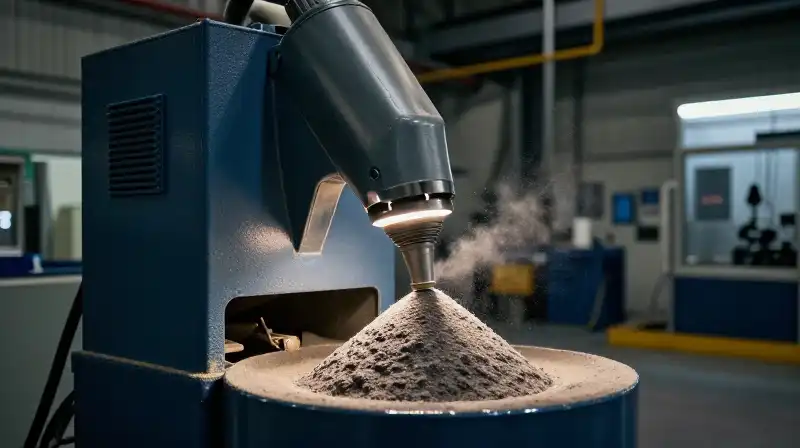
A sandblaster works by utilizing the high kinetic energy of propelled, high-velocity abrasive materials to remove unwanted surfaces, contaminants, or coatings from a target object. It is fundamentally an abrasive processing technique, designed to aggressively strip material while simultaneously preparing a clean substrate for subsequent treatments. This method moves beyond simple cleaning; its primary function is to ensure optimal adhesion for paints, primers, or new layers by creating a uniform, micro-scratched surface.
The Core Principle: Kinetic Energy Transfer
>The operation of a sandblaster is governed by the principles of fluid dynamics and mechanical abrasion. The process begins when a pressurized source, typically compressed air, forces a stream of abrasive media through a nozzle. The velocity of this stream is crucial—the faster the abrasive material travels, the greater the energy it transfers upon impact with the target surface.
This transfer of energy results in two primary modes of material removal, depending on the application and abrasive chosen:
- Pure Abrasion: In this method, the abrasive particles are dragged across the surface, similar to high-grit sanding. This is ideal for even, controlled removal of thin layers, such as old paint or surface oxides, without significantly damaging the underlying material.
- Impact Blasting: Used when more aggressive removal is needed, the abrasive particles strike the surface with high force. This impact is effective at dislodging heavily adhered materials, thick corrosion, or deeply embedded slag. This method carries a higher risk of altering the material’s surface integrity, requiring careful control.
Understanding the Abrasive Media
>The choice of abrasive media dictates the effectiveness, speed, and outcome of the blasting process. While historical methods utilized silica sand, modern industrial practices rarely use it due to significant health hazards. Instead, specialized, manufactured grains are selected based on the material being cleaned and the required finish.
Common and effective abrasives include:
- Aluminum Oxide: Highly durable and widely used for stripping coatings from various metals. It provides excellent uniformity.
- Garnet: A hard, natural mineral that is often chosen for its effectiveness in removing heavily oxidized metal or rust, especially on irregular surfaces.
- Ground Walnut Shell: A softer, less aggressive alternative, sometimes used in delicate cleaning or specific restoration projects where impact damage must be minimized.
The hardness of the abrasive must always be greater than the material being removed to ensure successful stripping.
The Critical Role in Surface Preparation
>Sandblasting is rarely the final step in a restoration or manufacturing process; rather, it is a critical preparatory stage. Its main value lies in the quality of the base substrate it creates. By removing contaminants and establishing a controlled, micro-scratched texture, the process achieves two vital outcomes: cleanliness and mechanical bonding.
A clean surface is not merely free of rust; it is chemically ready for bonding. Sandblasting creates a profile—a network of microscopic irregularities on the metal’s surface. This mechanical interlocking allows paints, powder coats, and protective coatings to adhere far more strongly and evenly than they would to a smooth, pristine surface.
Industrial Applications and Scenarios
>The scope of sandblasting is broad, spanning heavy industry to specialized maintenance. It is utilized whenever existing surface material impedes new functionality or aesthetic quality.
Key applications include:
- Metal Restoration: Preparing antique machinery, vehicles, or structural elements for full repainting or refurbishment.
- Corrosion Control: Stripping thick layers of rust and oxide scale from steel and iron before applying protective primers.
- Heavy Industrial Cleaning: Removing slag, residue, and industrial contaminants from molds, pipes, and manufacturing components.
- Specialized Cleaning: In specific fields like dentistry, modified abrasive techniques are used for precise cleaning of complex, small components.
Operational Differences and Constraints
>Not all blasting is performed in the open air. The method of operation significantly influences the process’s efficiency and economic viability. Understanding these variations is key to applying the correct technique.
Blasting Environments:
| Blasting Type | Mechanism | Best For | Key Consideration |
|---|---|---|---|
| Open Blasting | High-pressure stream into the atmosphere. | Large-scale outdoor projects, large parts. | High visibility, significant environmental containment needed. |
| Sealed/Recirculating Blasting | Media is contained within a closed tank and continuously recycled. | Cleaning numerous small parts or delicate, confined areas. | Highly economical, allows for multiple cleaning passes, minimizes waste. |
A common confusion exists between sandblasting and waterjet cutting. While both use high pressure, sandblasting is an abrasive stripping/cleaning process, whereas waterjet cutting uses ultra-high-pressure water and sometimes abrasives to slice through materials.
Practical Implementation and Safety Summary
>For professional execution, success hinges on knowing the limits and selecting the correct medium for the task at hand. The process is powerful, and its benefits depend entirely on its controlled application.
When selecting a sandblasting procedure, consider these practical criteria:
- Contamination Level: If the material is lightly contaminated (e.g., thin surface paint), a gentler abrasion or specialized shot may suffice. For heavy rust or industrial grime, high-impact blasting is necessary.
- Substrate Tolerance: If the material is thin, brittle, or requires intricate detail preservation, careful control and low-pressure, low-impact media are paramount to avoid structural damage.
- Environmental Impact: Choosing a recirculating system is often the most economical and environmentally responsible choice, especially when dealing with fine abrasive dust.
Always adhere to stringent safety protocols. Sandblasting generates fine airborne particulates and requires full personal protective equipment (PPE) to guard against dust inhalation and impact injury.
How to Perform Professional Sandblasting
Determine Required Removal Level
Assess the contamination level of the target object. If contamination is light (e.g., thin surface paint), opt for gentle abrasion; for heavy rust or industrial grime, high-impact blasting is necessary.
Evaluate Substrate Tolerance
Determine if the material is thin, brittle, or requires intricate detail. If so, employ careful control with low-pressure, low-impact media to prevent structural damage.
Select Appropriate Abrasive Media
Choose the abrasive grain based on the task. For general stripping, use Aluminum Oxide; for heavily oxidized metal or rust, select Garnet; for delicate cleaning, use Ground Walnut Shell.
Select Blasting Environment
Decide between Open Blasting (for large-scale outdoor projects) or Sealed/Recirculating Blasting (for small, numerous parts or minimizing environmental waste).
Execute the Blasting Process
Propel the abrasive media through a pressurized stream, choosing either Pure Abrasion for even removal of thin layers or Impact Blasting for aggressive removal of deeply adhered materials.
Adhere to Safety Protocols
Always utilize full personal protective equipment (PPE) to safeguard against fine airborne particulates and impact injury generated during the blasting process.
Related Articles