How Far Can a Bullet Travel? Velocity, Gravity, and Range Factors

Introduction
There is no single fixed number for how far a bullet can travel. Unlike a simple projectile in a vacuum, the range of a bullet—or “effective range”—is a dynamic outcome dictated by the complex interplay of physics, the precise design of the ammunition, and external environmental factors. To answer the question of how far a bullet travels, you must first understand that distance is not a constant, but a variable resulting from the balance between the accelerating force of the initial blast and the continuous decelerating forces of gravity and air resistance.
The Role of Physics: Gravity and Flight Time
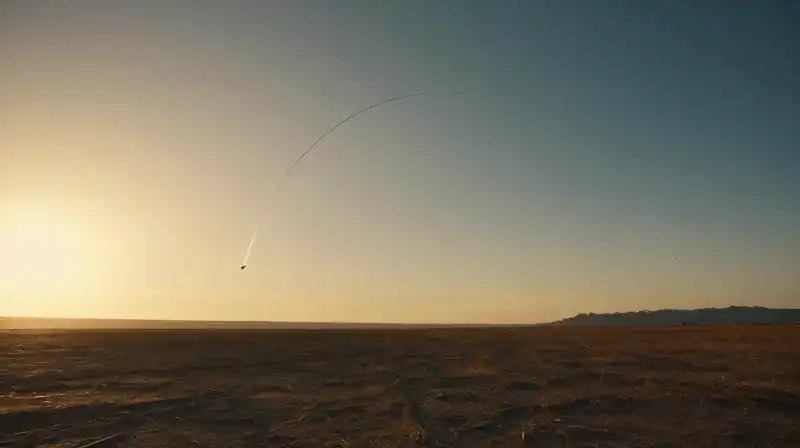
The trajectory of any projectile is fundamentally governed by gravity, which creates a downward pull on the projectile throughout its flight. The time a bullet spends in the air is primarily determined by the vertical component of its initial velocity and the height from which it is fired. In a simplified scenario, if a bullet is fired perfectly horizontally from a known height, the time until impact can be calculated using the formula derived from free-fall acceleration (9.81 m/s²). However, in real-world shooting, the vertical velocity component is usually significant, meaning the bullet follows a parabolic arc. This arc determines its horizontal range. Firing at an elevated angle significantly increases the “air time,” allowing the bullet more time to cover horizontal distance, while a flat or downward angle decreases this flight duration.
Initial Force: Muzzle Velocity and Cartridge Design
The most significant factor influencing how far a bullet can travel before hitting major limitations is its initial muzzle velocity—the speed at which it leaves the barrel. This velocity is directly related to the energy imparted by the gunpowder. The caliber of the cartridge, the amount and type of powder used, and the length of the barrel all contribute to the final muzzle velocity. Higher muzzle velocity generally translates to greater kinetic energy (calculated as mass multiplied by velocity squared), which dictates the bullet’s power and its potential for distance. While heavier bullets can maintain energy better at long distances, they require more power and a longer barrel to achieve the same initial velocity as a lighter projectile. The overall design of the cartridge is the initial blueprint for range.
The Major Limiter: Air Resistance and Ballistic Coefficient
While muzzle velocity provides the initial push, air resistance (or drag) is the dominant force that limits the practical range. Drag causes the bullet’s horizontal velocity to gradually decrease over time, and this decay is what ultimately determines the maximum distance a bullet can travel. The ability of a bullet to overcome this resistance is defined by its Ballistic Coefficient (BC). The BC is a measure of how efficiently a bullet moves through the air. Factors that improve a bullet’s BC and reduce drag include:
- Shape: Tapered or “boattail” designs minimize turbulence, allowing the bullet to maintain speed longer than blunt, round-nosed designs.
- Diameter and Material: More uniform and stable shapes interact less turbulently with the air.
- Rifling and Spin: Consistent spin stabilizes the bullet, leading to a more predictable and stable flight path with less unpredictable drag.
Environmental Conditions and Terminal Performance
Atmospheric conditions can drastically alter the effective range by increasing the degree of drag. Wind, temperature, and humidity are all critical external variables. * Wind: Crosswinds force the shooter to compensate, and sustained headwinds increase drag exponentially, significantly reducing the effective range. * Temperature and Humidity: Changes in air density—often linked to temperature and high humidity—change the resistance the bullet meets, requiring precise adjustments to maintain accuracy and range. The concept of terminal velocity is also relevant. While most high-velocity rounds never reach terminal velocity, understanding that resistance eventually balances acceleration helps explain how the energy of the projectile dissipates, affecting how far it can travel while still being functionally lethal.
Velocity and Kinetic Energy Drop
The relationship between velocity and distance is not linear; it is exponential. Since kinetic energy is proportional to the square of velocity (Energy = mass x velocity²), a slight decrease in speed translates into a disproportionately large drop in power and energy. This rapid rate of energy loss means that a bullet loses a much larger percentage of its power in the first 50 meters than it does between 500 and 1000 meters. Because of this exponential decay, range is often more about controlling the rate of energy loss through superior ballistic design than it is about the initial velocity alone.
Beyond Distance: Accuracy, Ethics, and Practical Range
While the physics determines the theoretical maximum distance, practical shooting is limited by accuracy. Achieving a specific target at great distances requires substantial compensation for the drop caused by gravity. Even a minor deviation in wind or velocity will cause the bullet to impact off-target, even if it technically still has kinetic energy. When considering how far a bullet can travel and still be effective, it is essential to distinguish between *reach* (how far it can travel) and *lethality* (how effective it is upon impact). While maximum range might technically exceed a mile for specialized projectiles, the effective, accurate, and lethal range is usually dictated by the shooter’s skill and the environmental conditions.
Criteria for Assessing Effective Range
When evaluating the performance of ammunition and predicting range, consider these criteria:
| Factor | High Performance (Long Range) | Low Performance (Short Range) |
|---|---|---|
| Bullet Design | Tapered, Boattail (High BC) | Round or Blunt (Low BC) |
| Ammunition Power | High-pressure powder, robust casing | Light loads, low-pressure powder |
| Environmental Needs | Requires frequent external adjustments (windage/elevation) | Performance is more stable in varied conditions |
| Overall Weight | Balanced weight to maximize BC | Very heavy or very light projectile |
Conclusion: Practical Considerations for Maximizing Range
The maximum distance a bullet can travel is the cumulative result of initial momentum and the resistance it can overcome. To maximize range, the focus must be on minimizing drag and stabilizing the bullet’s flight. This is achieved through careful selection of high Ballistic Coefficient ammunition and ensuring excellent shooter technique to maintain trajectory control. Always remember that while physics allows for impressive distances, the practical “effective range” is governed by the combination of environmental precision and the projectile’s ability to maintain accuracy as it loses kinetic energy.
Related Articles