
Does Unpopped Popcorn Go Bad? Shelf Life and Proper Storage Tips

Introduction
The common question, “Does unpopped popcorn go bad?” deals with the shelf life of a staple emergency and pantry item. The short answer is that, under ideal circumstances, unpopped kernels are considered a nonperishable food item that can maintain quality and viability indefinitely. However, the ability of kernels to pop and their safety are directly tied to a specific set of storage conditions. Simply having kernels in a cupboard does not guarantee long-term preservation.
Understanding the difference between safety, peak quality, and proper storage is essential for maximizing the utility of this durable food source.
Understanding the Shelf Life of Popcorn Kernels
Unpopped popcorn kernels share characteristics with other extremely shelf-stable foods, such as honey or certain legumes. Unlike perishable goods, kernels do not require refrigeration and can last for many years if kept consistently dry and sealed. While manufacturers may print an expiration date on bags, this date often reflects when the kernels are expected to achieve their peak flavor and texture, rather than a hard safety cutoff. In most cases, the kernel viability is determined by environmental factors, not just time.
For long-term storage, the goal is to maintain the kernels’ internal moisture levels and protect them from air, which is the primary driver of quality degradation. If stored correctly, kernels can potentially last over a year, making them a reliable choice for prepper rations and long-term pantry stock.
The Real Threat: Moisture and Rancidity
The main factor that causes unpopped popcorn to “go bad” is moisture exposure, which impacts both its usability and its safety. While rancidity (the degradation of fats) is a risk with any stored oil-containing item, moisture presents the more critical failure point for kernels.
The Impact of Moisture
Moisture is catastrophic for the kernel’s ability to expand. Even a small amount of ambient humidity or condensation can compromise the structure of the kernel, making it impossible for it to pop properly when heated. This is the most common way kernels are rendered useless, even if they haven’t yet developed visible mold.
Other signs that kernels have spoiled or are no longer viable include:
- Chewy Texture: A noticeable change in texture or a soft, mushy feel indicates internal degradation.
- Rancid Odor: A strong, oily, or sour smell suggests the fats within the kernel are breaking down.
- Mold: The presence of any visible fuzz, discoloration, or spots is a definitive sign of spoilage and a serious health risk that necessitates disposal.
Best Practices for Long-Term Storage
To ensure your popcorn kernels remain crisp, viable, and safe for consumption, storage methods must prioritize protection from light, air, and, most importantly, moisture.
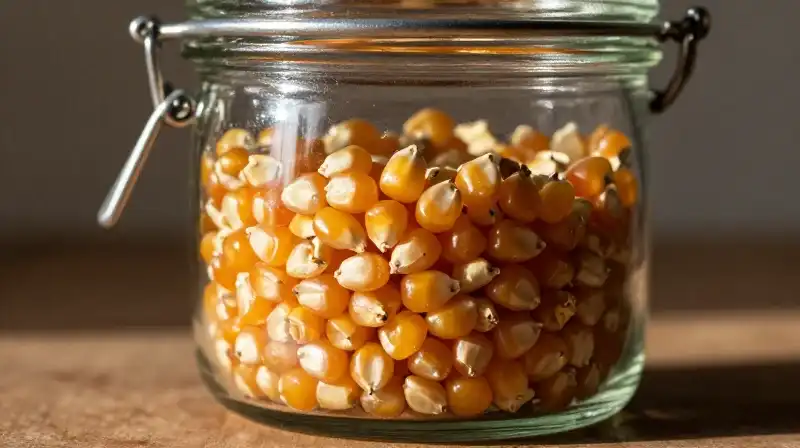
- Use Airtight Containers: Transfer kernels from the original packaging into heavy-duty, airtight containers (glass or sturdy plastic are ideal). This creates a seal that prevents air exchange and moisture ingress.
- Keep It Cool and Dark: Store the containers in a cool, dark, and stable location—away from the stove, direct sunlight, and areas prone to temperature fluctuation.
- Ensure Dry Conditions: Never store kernels in humid areas, such as a damp basement or near a window in a tropical climate. The storage area must be completely dry.
- Avoid Pests: Store kernels in containers that are secure and placed away from potential rodent or insect access.
Kernels vs. Popped Popcorn Shelf Life Comparison
It is vital to distinguish between the shelf life of the unprocessed kernel and the finished product. Once popcorn has been prepared, its shelf life dramatically decreases, regardless of storage method.
The consumption timeline should be immediate after preparation to maximize flavor. Generally:
- Unpopped Kernels: Can last indefinitely (1+ year) when stored perfectly.
- Opened Popped Popcorn: Typically lasts between two to four weeks, though this time shrinks quickly as it is exposed to air.
- Pre-Packaged Microwave Popcorn: The date listed advises the optimal consumption window for taste, but food safety dictates checking for signs of mold or rancidity before consumption.
Addressing Common Storage Concerns
Readers often have specific scenarios in mind regarding where to store their reserves. Below are practical guidelines for common doubts:
Can I Store Popcorn Kernels in the Fridge or Freezer?
If you are concerned about environmental humidity in your pantry, placing unpopped kernels in a sealed container in the freezer is an excellent preservation method, as the cold temperature halts most microbial growth and slows down chemical degradation. Keeping them in the refrigerator is unnecessary for short-term storage but also unlikely to provide significant long-term advantages over a dark, cool cupboard.
What To Do With Old Popcorn Kernels?
If kernels show signs of rancidity (smell) or mold (sight), they must be discarded immediately. Because kernels are so stable, a small amount of deterioration can be easily spotted. If the kernels are still sealed and pristine, they can likely be saved. If they are stale or merely less flavorful, they are often still perfectly safe to use for popping.
Final Quality Assessment and Pre-Consumption Warning
Before popping or consuming any batch of kernels, a mandatory quality check should be performed. Since the printed date is a guide for optimal taste rather than a safety guarantee, users should rely on observable criteria. Inspect the kernels visually for any mold or discoloration. Smell them for any rancid or musty odors. If either of these conditions is present, the kernels should not be consumed.
By focusing on keeping your popcorn kernels dry and sealed, you leverage the product’s inherent durability and ensure a reliable source of shelf-stable food for the long term.
How to Store Popcorn Kernels for Long-Term Preservation
Transfer to Airtight Containers
Transfer kernels from the original packaging into heavy-duty, airtight containers (glass or sturdy plastic are ideal) to prevent air exchange and moisture ingress.
Select Storage Location
Store the containers in a cool, dark, and stable location, ensuring the area is away from the stove, direct sunlight, and temperature fluctuations.
Maintain Dry Conditions
Ensure the storage area is completely dry; never store kernels in humid environments, such as a damp basement.
Protect from Pests
Store kernels in secure containers and place them away from potential rodent or insect access.
Related Articles