
Does a Panda Eat Meat? The Science of Bamboo Specialization

Introduction
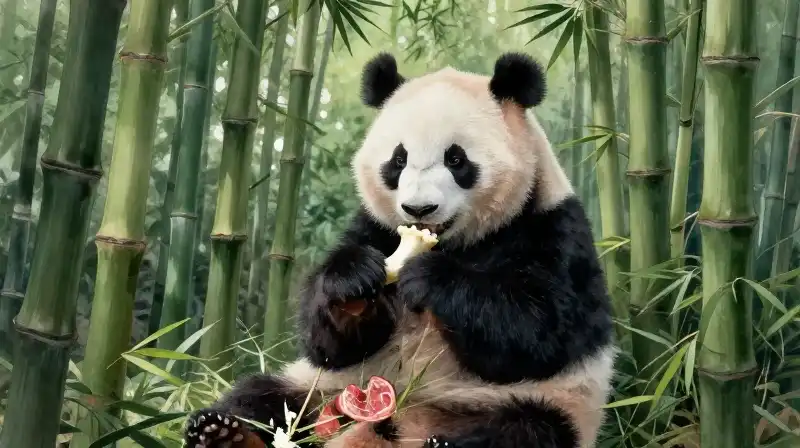
The question of does a panda eat meat has a nuance far beyond a simple yes or no. Giant pandas are fundamentally classified as highly specialized herbivores. While they retain anatomical characteristics and evolutionary links to omnivorous bear species, their survival depends almost entirely on a primary diet of bamboo. In the wild, pandas consume meat, but it constitutes an extremely minimal and largely opportunistic fraction of their total caloric intake, often less than 1%.
The Dominance of Bamboo as a Survival Strategy
Bamboo forms the vast majority of a giant panda’s diet. The reason for this specialization is rooted in practical availability and resource efficiency rather than a lack of hunting instinct. Bamboo is overwhelmingly favored for several key logistical reasons:
- Accessibility: Bamboo grows abundantly in the habitats pandas inhabit.
- Ease of Acquisition: It is far easier and less energetically demanding for a panda to find and process large quantities of bamboo compared to the risks and effort involved in hunting live prey.
- Nutritional Focus: Despite the high fiber content of bamboo, it provides the necessary caloric volume required for a species that must consume massive amounts to stay full.
Despite their ability to digest meat, the panda’s natural behavior and evolved preferences dictate a strong reliance on plant life.
The Role of Meat in the Diet: Exception, Not Rule
While pandas are not exclusively plant-eaters, their meat consumption is incidental rather than a core part of their diet. The small amounts of meat or other animals they occasionally consume are generally related to convenience in the wild—such as finding carcasses or opportunistic scavenging—and are not linked to a developed predatory hunting drive. This minimal intake highlights a critical distinction between evolutionary potential and ecological reality. Pandas possess the digestive capacity for meat, but their ecological niche has been so narrowly defined by the availability of fast-growing bamboo that the necessity for a predatory lifestyle has diminished.
Evolutionary Adaptation: The Science of Bamboo Processing
To understand the pandas’ extreme specialization, it is necessary to look at their physiological adaptations, which extend into molecular biology. Pandas have developed unique physical traits—such as specialized pseudo-thumbs for grasping bamboo culms and flattened teeth—that are specifically tailored to consume this fibrous plant matter. Furthermore, scientific research has revealed a sophisticated level of biological regulation that reinforces this dietary choice:
The consumption of bamboo triggers a unique biological response known as regulation via microRNAs (miRNA). These plant-derived miRNAs are absorbed through the panda’s diet, enter the bloodstream, and act as internal genetic regulators.
These absorbed miRNAs influence critical internal processes, including:
- Gene Expression: Changing how the panda’s body processes information to support their digestion and metabolism of bamboo.
- Biological Rhythms: Affecting the pandas’ internal clocks and physiological cycles.
- Sensory Perception: Adjusting the animal’s sensory systems, specifically improving the detection of the scent and flavor of bamboo to ensure a consistent and satisfying intake.
This continuous biological feedback loop allows the panda to maintain its highly specialized diet even as it grows or ages.
Captive Environments vs. Natural Behaviors
The context of their diet often differs significantly between the wild and managed environments, such as zoos.
In managed settings, zoo keepers typically maintain a strictly plant-based regimen due to ethical considerations regarding altering the animal’s natural state. Furthermore, managing and procuring raw meat is often logistically impractical and significantly more costly than sourcing and providing bamboo.
However, in captive research, pandas may receive supplementary nutrition beyond bamboo, which can include items like apples or specific fortified foods. Despite these supplements, the overwhelming volume of bamboo required for the panda’s high-fiber metabolism ensures that their daily consumption remains overwhelmingly plant-based, regardless of what else they are fed.
Understanding Dietary Confusion: Addressing Related Concerns
The variability in dietary reports often stems from conflating genetic capacity with behavioral reality. To clarify common points of confusion:
| Query Focus | The Scientific Reality | Functional Impact |
|---|---|---|
| Did pandas used to eat meat? | Their ancestors were omnivorous bears, meaning the genetic capability exists. | They possess the physical structures, but behavior-wise, the shift to plant reliance occurred. |
| Do pandas eat fish or other prey? | On rare, opportunistic occasions, they may consume small parts of prey like fish or rodents. | This accounts for the <1% meat intake; it is an event, not a habit. |
| Why did pandas stop eating meat? | The availability of a highly specialized and calorie-rich primary food source (bamboo) dictated the shift. | The efficiency of the bamboo resource allowed for the specialization, leading to a loss of the predatory drive. |
The Necessity of Balance: Practical Considerations for Diet
The panda’s specialization is one of the most dramatic examples of an animal successfully thriving despite the nutritional limitations of its primary food source. The constant, high volume of bamboo intake necessitates a diet that is predominantly plant-based. If pandas were to significantly shift back toward a heavy carnivorous diet, they would face serious physiological and nutritional challenges, as their systems are currently evolved to process and regulate nutrients derived from bamboo.
The most valuable takeaway for readers is recognizing that a panda’s diet is defined by specialization. Their capacity to eat meat is a biological fact, but their reliance on bamboo is an ecological, evolutionary, and physiological imperative. They are, fundamentally, bamboo specialists.
Related Articles